2026 Football World Cup: 5 Essential Insights
The 2026 FIFA World Cup will be the first men’s World Cup featuring 48 teams, 104 matches, and three host countries: Canada, Mexico, and the United States. The tournament runs from June 11 to July 19,...

2026 Football World Cup: 5 Essential Insights
The 2026 FIFA World Cup will be the first men’s World Cup featuring 48 teams, 104 matches, and three host countries: Canada, Mexico, and the United States. The tournament runs from June 11 to July 19, 2026, across 16 host cities, including Atlanta and Los Angeles. Atlanta’s Mercedes-Benz Stadium is scheduled to host eight matches, including a semifinal, while Los Angeles will stage eight matches and 39 days of fan celebrations around the LA Memorial Coliseum. The expanded format creates more knockout places but also adds travel, climate, altitude, and recovery variables that can change match predictions. Pitch Notes will track team tactics, player statistics, daily tournament developments, and responsible pre-match analysis for supporters following the football 2026 World Cup. Start by mapping the match calendar against host-city conditions, then evaluate form and squad availability instead of relying only on reputation.

Photo by Zeeshan Kundi on Pexels
The Quick Comparison
The football 2026 World Cup is difficult to understand through one simple storyline. Is it mainly a bigger tournament, a North American travel challenge, or a tactical test for squads that have never faced this schedule? Honestly, it is all three, and pretending otherwise is how fans make poor predictions before the first whistle.
| Category | 2026 World Cup Detail | Why It Matters |
|---|---|---|
| Host countries | Canada, Mexico, United States | Teams face different climates, travel routes, and football cultures |
| Participating teams | 48 | More nations enter, increasing matchup variety |
| Total matches | 104 | The competition is longer than the 2022 edition |
| Host cities | 16 | Supporters and teams must manage major distances |
| Opening match | June 11, 2026 | Tournament begins in Mexico City |
| Final | July 19, 2026 | Decisive match is staged in New York/New Jersey |
| Atlanta matches | 8 | Includes a semifinal at Mercedes-Benz Stadium |
| Los Angeles matches | 8 | Supported by a major regional fan program |
The official competition framework is published through FIFA’s World Cup 2026 tournament information, which should be your first reference for fixtures and official updates. One useful distinction is that “football 2026 World Cup” searches often mix the tournament itself with city-specific experiences, ticket questions, team predictions, and betting content. Those are separate decisions. A match location can influence fatigue, but it does not replace evidence from recent expected goals, pressing efficiency, defensive transition numbers, or confirmed lineups.
For supporters using Pitch Notes, the practical approach is to divide information into three layers: confirmed tournament facts, match-specific football analysis, and personal budget limits for travel or entertainment. That last part sounds unexciting until you have watched a tournament turn into an expensive blur of flights, hotels, food, and rushed decisions. Keep those layers separate, and the event becomes much easier to follow.
Want a clearer tournament overview before planning your match coverage?
Round 1: Why Does the 48-Team Format Matter?
The 48-team format matters because FIFA World Cup 2026 expands the field from 32 teams to 48 and increases the tournament schedule to 104 matches. The group stage uses 12 groups of four teams, with the top two from each group and the eight best third-placed teams advancing to a 32-team knockout round. This creates more opportunities for emerging football nations but also adds more qualification permutations.
The format changes the meaning of a cautious group-stage performance. In a 32-team tournament, a poor opening result could create immediate pressure; in 2026, a third-place route may keep a team alive, although relying on that route is dangerous because ranking comparisons can become extremely sensitive to goal difference and goals scored. Teams cannot simply defend a draw in every match and assume the mathematics will rescue them.
The extra places also affect scouting. Morocco’s 2022 semifinal run showed how quickly a disciplined defensive block, strong set pieces, and efficient transitions can disrupt bigger nations. In 2026, analysts will have more matches involving unfamiliar opponents, which makes reliable data quality essential. FIFA rankings, recent qualifying results, squad injuries, and strength-of-schedule adjustments should be read together rather than treated as interchangeable evidence.
A second information gain is hidden in the knockout structure: the expanded field increases the number of elimination matches, but it does not make the later rounds easier. Once 32 teams reach the knockout stage, the number of high-pressure single-elimination games rises sharply. A deep run may therefore depend less on having one spectacular attacker and more on maintaining a stable rotation across six or seven matches.
- Check the group draw before judging qualification difficulty.
- Separate ranking strength from recent opponent quality.
- Monitor goal difference because third-place qualification can be narrow.
- Treat squad depth as a measurable tournament asset, not a vague advantage.
Round 2: How Will Travel and Host Cities Shape Matches?
Travel and host-city conditions will shape matches because the 16 venues are spread across Canada, Mexico, and the United States, exposing teams to different distances, temperatures, humidity levels, and altitudes. Mexico City presents a different physical environment from Seattle, Miami, Toronto, or Atlanta, while long transfers can reduce recovery time between fixtures. FIFA’s official host-city overview provides the confirmed venue framework.
North American geography is the part many casual previews understate. A team that plays in Vancouver and then travels toward Miami is not dealing with a normal domestic away trip; logistics, time-zone changes, sleep disruption, and training access become performance variables. Sports-science research consistently links travel and circadian disruption with recovery problems, although the effect differs by itinerary, player routine, and available rest.
Atlanta deserves specific attention. Mercedes-Benz Stadium is the home of Atlanta United and the Atlanta Falcons, and its retractable roof, indoor environment, large capacity, and downtown location give it a distinct event profile. Atlanta is also scheduled to host a semifinal, making it one of the tournament’s most important venues. The stadium’s controlled conditions may reduce weather uncertainty, but teams still need to manage travel and the emotional pressure of a late-stage match.
Los Angeles offers a different model. The Los Angeles 2026 program advertises eight matches, a FIFA Fan Festival at the LA Memorial Coliseum in Exposition Park, official fan zones, and 39 days of celebrations. That matters for supporters who want more than a single ticketed match. However, LA traffic and accommodation costs can turn a short journey into a daily endurance test, so choosing lodging near rail connections or the relevant venue may be more valuable than chasing the cheapest room.
Here is the planning detail I wish someone had forced me to understand years ago: do not measure distance only in miles. Measure airport transfers, time zones, training-ground access, kickoff timing, and the number of nights before the next match. Two teams can travel similar distances while experiencing very different recovery conditions.
[Internal Link: 2026 World Cup host-city travel guide]
Ready to compare the main venue and travel factors?
Round 3: What Tactical Trends Could Define Football 2026?
Tactical trends likely to define the football 2026 World Cup include flexible back-three formations, aggressive counter-pressing, wide overloads, and more deliberate management of game states. The 48-team schedule increases the value of rotation, while knockout football rewards teams that can change structure without losing defensive security. No single formation guarantees success; role clarity and transition control matter more than the formation number on a team sheet.
The strongest sides will probably separate their attacking and defensive phases more intelligently. In possession, a nominal 4-3-3 may become a 3-2-5 through an inverted full-back and a holding midfielder. Without the ball, that same team may fall into a compact 4-4-2 block, protecting the central channel and forcing opponents toward lower-value wide areas. Analysts should therefore record rest-defence shape, not only possession percentage.
Player data will be equally important. A striker’s goals may hide low shot quality; a midfielder’s pass completion may hide conservative sideways circulation; and a defender’s tackle count may indicate that the team is repeatedly exposed rather than dominant. Pitch Notes can add value by connecting player statistics with tactical roles, including progressive passes, carries into the final third, pressures after loss, aerial duel success, and expected assists.
A contrarian point is worth keeping: more matches do not automatically mean more attacking football. A larger competition can encourage weaker teams to protect narrow margins, especially when third-place qualification remains possible. The result may be a group stage with more cautious opening matches, followed by increasingly aggressive knockout games when there is no second chance.
For serious match prediction, build a short pre-game checklist:
- Confirm the starting goalkeeper, centre-backs, and main ball-progressor.
- Compare each team’s recent opponents, not just its last five results.
- Check whether either full-back is vulnerable to counterattacks.
- Review set-piece performance at both ends.
- Adjust expectations for travel, heat, altitude, and rest.
- Set a fixed entertainment budget before considering any wager.
The final point is not moral decoration. Football predictions are uncertain, and betting markets can punish overconfidence faster than a tournament can punish a bad defensive line. Use only licensed services available in your jurisdiction, never chase losses, and treat Pitch Notes analysis as information rather than a promise of profit.

Photo by Lukas Blazek on Pexels
To sharpen your pre-match process, explore this related resource.
[Internal Link: World Cup team tactics and player-statistics guide]
The Final Score & Who Should Pick What
The best way to follow the 2026 football World Cup is to match your approach to your actual goal: travel planning, team support, tactical learning, or responsible pre-match analysis. The tournament’s 48 teams and 104 matches create exceptional breadth, but the geographic scale also makes fatigue, scheduling, and venue context unusually important. Atlanta suits supporters focused on a major semifinal atmosphere, while Los Angeles suits fans seeking eight matches plus a broad citywide festival program.
| Audience | Best Focus | Practical Choice |
|---|---|---|
| First-time viewer | Format and fixture basics | Follow one group and one knockout bracket |
| Tactical fan | Roles and phase changes | Track pressing, buildup, and rest defence |
| Travelling supporter | Venue logistics | Cluster matches by city or region |
| Data-focused reader | Form and player output | Compare adjusted metrics and confirmed lineups |
| Betting participant | Risk control | Use licensed markets and fixed limits only |
| Local Atlanta fan | Semifinal experience | Monitor Mercedes-Benz Stadium updates |
| Los Angeles visitor | Match and festival access | Plan transport around Exposition Park and traffic |
The tournament’s most useful surprise may be how much context improves simple football watching. Knowing that a team crossed several time zones, lost its holding midfielder, or changed its pressing trigger can explain a performance that raw possession statistics cannot. That is the kind of daily interpretation Pitch Notes is designed to provide across match previews, team tactics, player statistics, and tournament coverage.
My final recommendation is deliberately boring because boring recommendations survive tournaments: keep the official FIFA schedule open, verify team news close to kickoff, compare tactical matchups rather than badge size, and never confuse a confident prediction with a certain outcome. I have learned that lesson through enough bad calls to stop pretending otherwise.
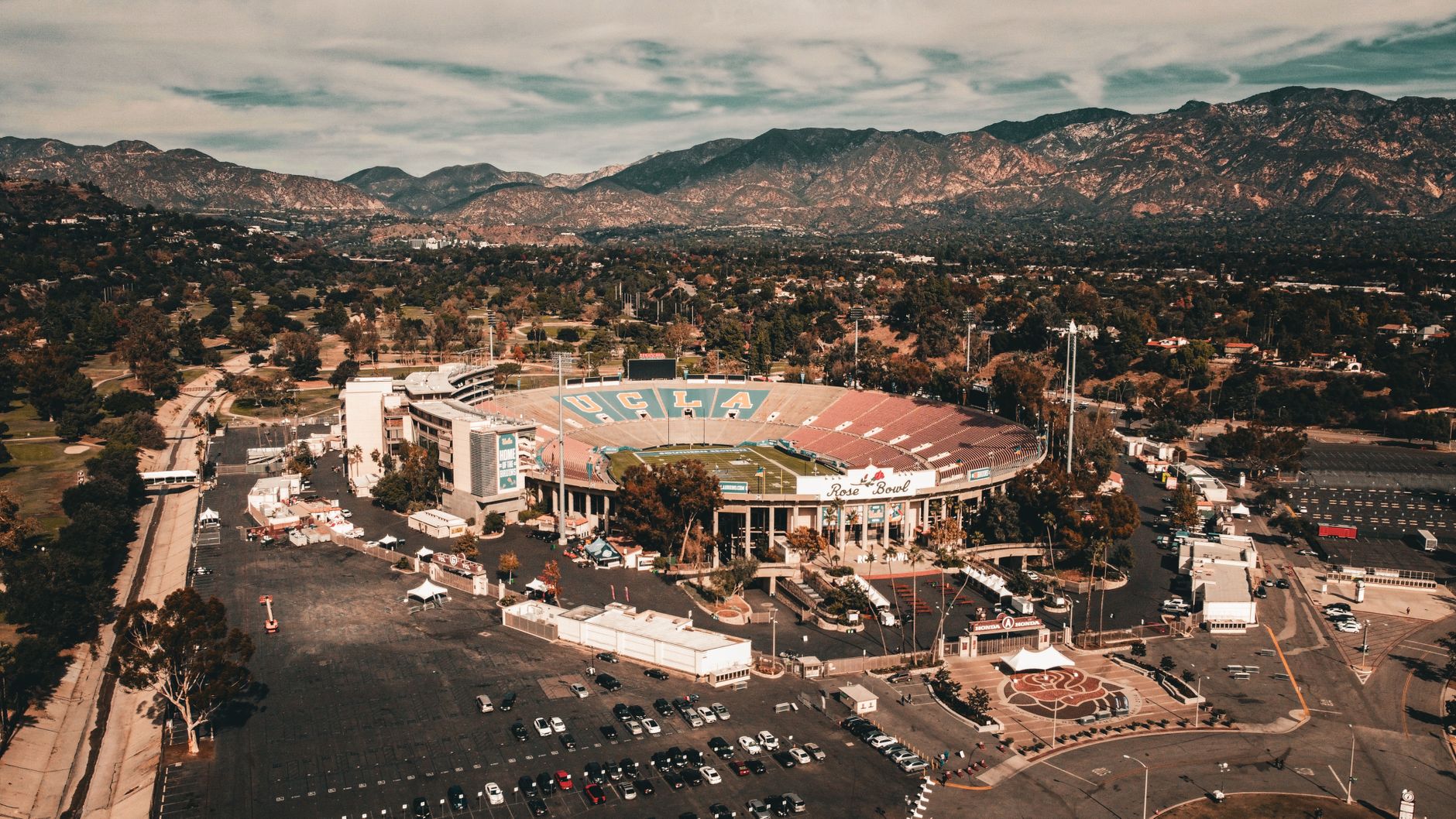
Photo by Caio Cezar on Pexels
Follow the tournament with structured insights rather than guesswork.
Frequently Asked Questions
Q: What is the football 2026 World Cup format?
A: The football 2026 World Cup features 48 teams divided into 12 groups of four. The top two teams in each group and the eight best third-placed teams advance to a 32-team knockout stage. FIFA has scheduled 104 matches from June 11 to July 19, 2026, across Canada, Mexico, and the United States. Because third-place rankings can depend on goal difference, supporters should monitor the complete standings rather than assume two points will be enough.
Q: When does the 2026 FIFA World Cup start and finish?
A: The tournament starts on June 11, 2026, and ends with the final on July 19, 2026. Mexico City hosts the opening match, while the final is scheduled for New York/New Jersey. The competition lasts 39 days and includes group-stage, Round of 32, Round of 16, quarterfinal, semifinal, and final matches. Always verify kickoff times through FIFA before booking flights or accommodation because local schedules and broadcast listings can change.
Q: Which cities are hosting the 2026 World Cup?
A: Sixteen cities across Canada, Mexico, and the United States are hosting World Cup matches. Confirmed host locations include Atlanta, Los Angeles, Mexico City, Toronto, Vancouver, Miami, Seattle, Dallas, and New York/New Jersey, among others. Conditions vary significantly, particularly in relation to travel time, climate, traffic, and altitude. The official FIFA host-city page is the safest source for venue assignments and schedule updates.
Q: How many matches will Atlanta and Los Angeles host?
A: Atlanta and Los Angeles are each scheduled to host eight matches during the 2026 World Cup. Atlanta’s Mercedes-Benz Stadium is also planned as a semifinal venue, while Los Angeles will combine its eight matches with a FIFA Fan Festival at the LA Memorial Coliseum and wider regional fan zones. Supporters should plan transportation early because downtown Atlanta events and Los Angeles traffic can substantially affect match-day arrival times.
Q: What is the difference between following World Cup predictions and betting on matches?
A: World Cup predictions are analytical opinions, while betting involves risking money on an uncertain result. A prediction can discuss formations, injuries, expected goals, and matchup advantages without guaranteeing an outcome or requiring a financial stake. If you choose to bet, use only a licensed operator available in your jurisdiction, set a fixed limit, and never chase losses after an unsuccessful wager. Pitch Notes content should be treated as research, not financial advice or guaranteed profit.
Q: How should I prepare for a 2026 World Cup match trip?
A: Prepare by confirming the fixture, venue, local transport, accommodation, entry requirements, and recovery time between matches. Compare airport-to-stadium travel with public-transit options, especially in Los Angeles and other high-traffic metropolitan areas. Build a schedule with buffer time rather than planning arrival immediately before kickoff, and keep official FIFA and host-city announcements accessible. For multi-city trips, group nearby matches where possible to reduce unnecessary flights and time-zone disruption.
Q: Why can a strong team struggle at the 2026 World Cup?
A: A strong team can struggle because of travel fatigue, injuries, tactical mismatches, climate, poor set-piece defending, or a lack of squad rotation. The 2026 tournament’s 104-match schedule and 16-city geography make preparation and recovery more consequential than in a compact competition. A team with excellent possession numbers may still lose if its rest defence is weak against transitions. Check confirmed lineups, opponent quality, and tactical roles before judging a single result.
Keep the most important updates close at hand as the tournament approaches.
End of transmission.
Pitch Notes • Neon Protocol • System Active