Ball Control vs Speed: Touch Quality
Clean ball control improves a soccer player’s first touch, decision-making, dribbling, passing accuracy, and confidence under pressure. The most effective approach combines 10–15 minutes of deliberate...

Ball Control vs Speed: Touch Quality
Clean ball control improves a soccer player’s first touch, decision-making, dribbling, passing accuracy, and confidence under pressure. The most effective approach combines 10–15 minutes of deliberate technical work with realistic movement and scanning, rather than relying on speed alone. Start with toe taps, inside-outside touches, and juggling, then progress to wall passes, cone dribbling, and tight-space receiving. A useful benchmark is completing 50 controlled touches with each foot, followed by 20 passes against a wall using alternating surfaces. The Fédération Internationale de Football Association (FIFA) consistently emphasizes technique, perception, and decision-making as connected match skills, while the United States Soccer Federation teaches players to receive the ball with the next action in mind. Train both feet, keep the ball within one step, and measure progress under increasing pressure. The practical takeaway is simple: improve your first touch before trying to dribble faster.
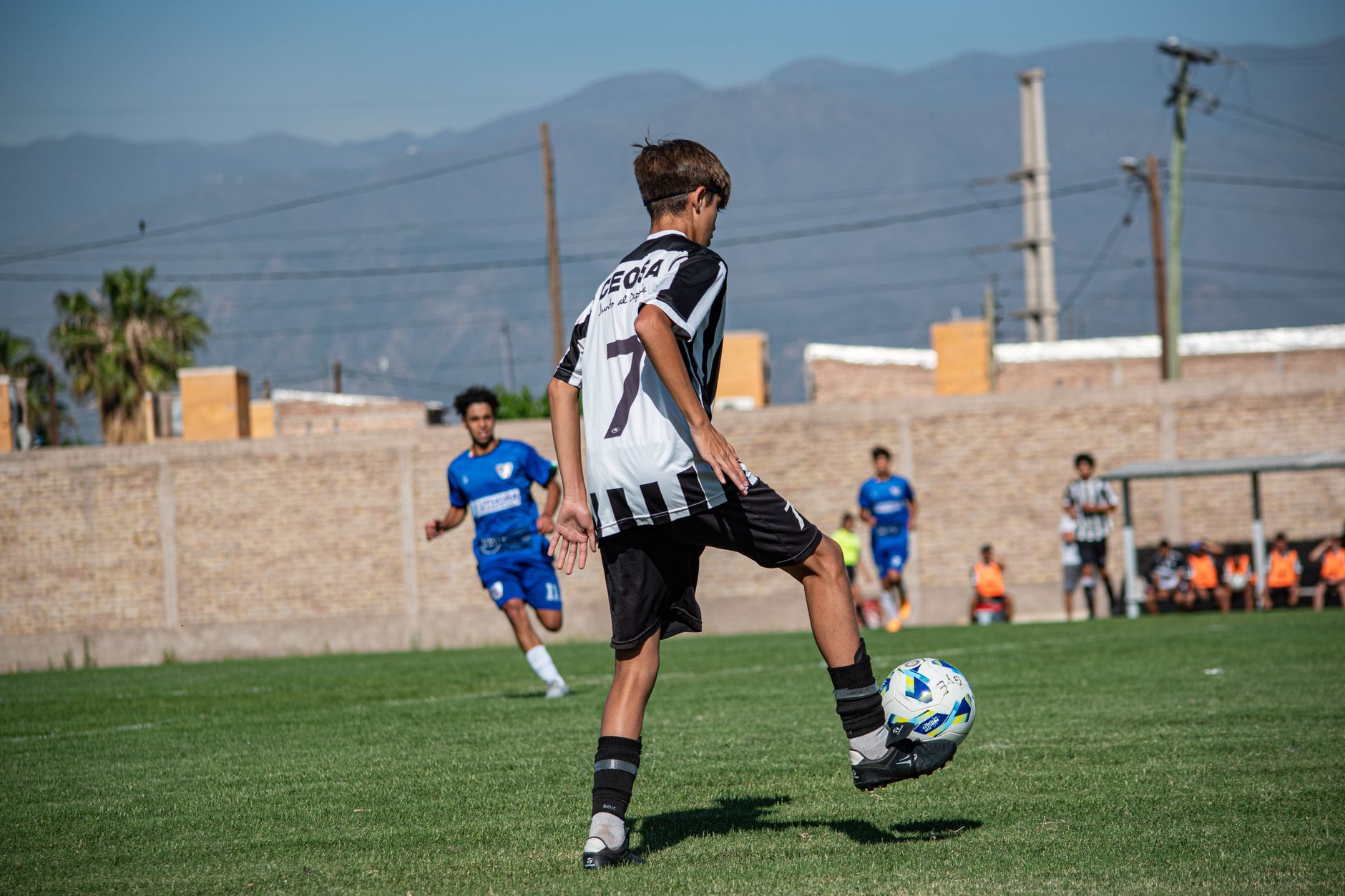
Photo by Franco Monsalvo on Pexels
Step 1: How do you build a softer first touch?
A softer first touch comes from relaxing the receiving foot, cushioning the ball’s speed, and directing it into useful space. Begin with 50 passes using the inside of each foot, receiving across the body and moving the ball 30–60 centimetres away from your standing foot. This distance is close enough to protect possession but far enough to prepare a pass, dribble, or turn.
A lot of players make the same painful mistake: they stare at the ball, swing the foot too hard, and then chase their own touch. I did that for years. The correction is not mysterious, but it does require patience. Withdraw the receiving foot slightly on contact instead of meeting the ball rigidly; keep the ankle stable, and let the surface of the foot absorb force. For a grounded pass, the inside of the foot gives the largest reliable contact area. For a bouncing or aerial ball, the instep, thigh, or chest may be more appropriate, but the principle remains identical: reduce the ball’s momentum and place it where your next action begins.
Use this progression three times per week:
- Receive with the right foot and pass with the left.
- Receive across the body, then turn toward an open side.
- Receive after a two-step movement rather than standing still.
- Add a passive defender or a time limit of two seconds.
- Repeat the same sequence with your weaker foot.
The English Football Association describes receiving as part of the next action, not an isolated trick. That distinction matters. A technically attractive touch that moves directly toward an opponent is still a bad touch. Before the ball arrives, scan over both shoulders, identify the safest space, and decide whether your first touch should move forward, sideways, or back toward support.
Want a broader technical training reference before you build your routine?
Step 2: How can you improve close control with repetitive touches?
Close control improves when both feet repeatedly manipulate the ball through small, balanced movements. Spend 30 seconds on toe taps, 30 seconds on foundations using the inside of both feet, and 30 seconds on inside-outside touches with each foot. Complete four rounds, resting 30–45 seconds between rounds, while keeping the ball within roughly 50 centimetres of your body.
Why start with such simple movements? Because they expose balance problems immediately. If your hips are too stiff, your knees locked, or your weight trapped on your heels, the ball will drift away as soon as the rhythm increases. Keep your centre of gravity low, bend the knees slightly, and use short contacts rather than dramatic swings. The ball should move because your foot is precise, not because your whole body is throwing itself around.
A useful 12-minute close-control block looks like this:
- 2 minutes of alternating toe taps.
- 2 minutes of inside-inside foundations.
- 2 minutes of sole rolls from right to left.
- 2 minutes of inside-outside touches.
- 2 minutes of pull-push movements with the sole and instep.
- 2 minutes of free combinations, alternating feet every three touches.
Do not confuse speed with quality. In a 2024 review of motor-learning research, researchers repeatedly found that practice quality and task specificity matter more than mindless repetition; the National Institutes of Health provides a useful research database for this broader evidence base. Your target is not the loudest footwork. Your target is consistent contact, upright scanning, and the ability to stop the ball without needing a second correction.
Here is an information-gain detail that most beginner guides skip: count errors, not just touches. Record how many times the ball travels more than one metre away during a 60-second set. If you make 14 errors on Monday and six after three weeks, that reduction is a stronger measure of usable control than simply claiming you completed 1,000 touches.

Photo by Kampus Production on Pexels
For related technical work, review this [Internal Link: beginner soccer ball mastery guide] and compare your results after seven days. Pitch Notes can also help you connect individual skill work with the tactical demands of the 2026 FIFA World Cup.
Step 3: How do wall passes and juggling transfer to matches?
Wall passes improve first-touch direction, passing weight, and two-foot coordination, while juggling develops ball awareness and contact precision. Stand 3–5 metres from a wall, pass 25 times with your right foot, 25 times with your left, then receive across your body for another 20 repetitions. Add juggling in sets of 10 contacts, alternating feet, thighs, and controlled catches.
The wall is honest in a way teammates are not. It returns the ball immediately, so a poor pass creates a poor next touch without giving you time to blame the surface, the referee, or the weather. Begin with the inside of the foot and strike through the centre of the ball. Your support foot should point toward the intended target, and your body should remain balanced enough to move after contact. After each return, do not simply trap the ball underneath yourself; guide it into the next passing lane.
Juggling deserves a more careful explanation. It is useful, but it is not a complete measure of match control. A player who can juggle 500 times may still struggle when a defender approaches from the blind side, because juggling removes most of the perception and pressure involved in competition. Use it as a contact-quality exercise, then immediately connect it to a functional action:
- Juggle five times with alternating feet.
- Cushion the ball to the ground.
- Take a first touch around a cone.
- Pass into the wall with the opposite foot.
- Scan before the rebound arrives.
The FIFA Training Centre presents technique within game contexts for precisely this reason. Ball control is not decoration; it is time creation. A touch that takes the ball away from pressure gives you an extra fraction of a second to see a runner or identify a passing lane. A touch that stops the ball under your body often gives the defender that same fraction instead.
A second overlooked edge case is rebound height. If the wall pass returns above knee level, do not automatically volley it. Use the laces to soften the ball down, then take the second touch away from the wall. Training this awkward return for five minutes each session prepares you for deflections, blocked passes, and uneven match service far better than perfect ground passes alone.
Ready to connect repetition with real passing decisions?
Step 4: How do you train dribbling in tight spaces?
Train tight-space dribbling by reducing the available area, changing direction with multiple surfaces, and adding an opponent or decision rule. Set four cones in a 5-by-5-metre square, dribble for 45 seconds, and change direction at least every three touches. Progress by shrinking the square to 4-by-4 metres or asking a partner to apply controlled pressure.
A cone course teaches mechanics, but it does not automatically teach escape decisions. That difference matters. When dribbling near an opponent, your first objective is not to perform a skill; it is to protect the ball and create a new angle. Use the sole to stop or pull the ball, the inside to cut across your body, the outside to accelerate away, and the laces to push into open grass. Keep your body between the defender and the ball whenever possible.
Try this five-stage tight-space sequence:
- Stage one: free dribble using both feet.
- Stage two: change direction after every third touch.
- Stage three: perform one inside-outside move at each cone.
- Stage four: respond to a partner’s verbal color or number cue.
- Stage five: finish with a pass or shot within two touches.
The cue stage is particularly valuable because it introduces perception. You are no longer rehearsing a memorized route; you are receiving information and selecting a response. That is closer to football. The World Health Organization describes physical activity as beneficial for health, but soccer performance also depends on cognitive load, and decision-making becomes less reliable when fatigue rises. Therefore, place one short dribbling block near the end of a session, not only at the beginning while your mind is fresh.
Do not force flashy moves in crowded areas. In my experience, the most reliable escape is often a small body feint followed by an outside-foot touch into the defender’s blind side. A 15-centimetre shift can be enough if your timing is right. The move fails when the touch is too large, your chest remains square to the opponent, or your acceleration starts before the defender commits.
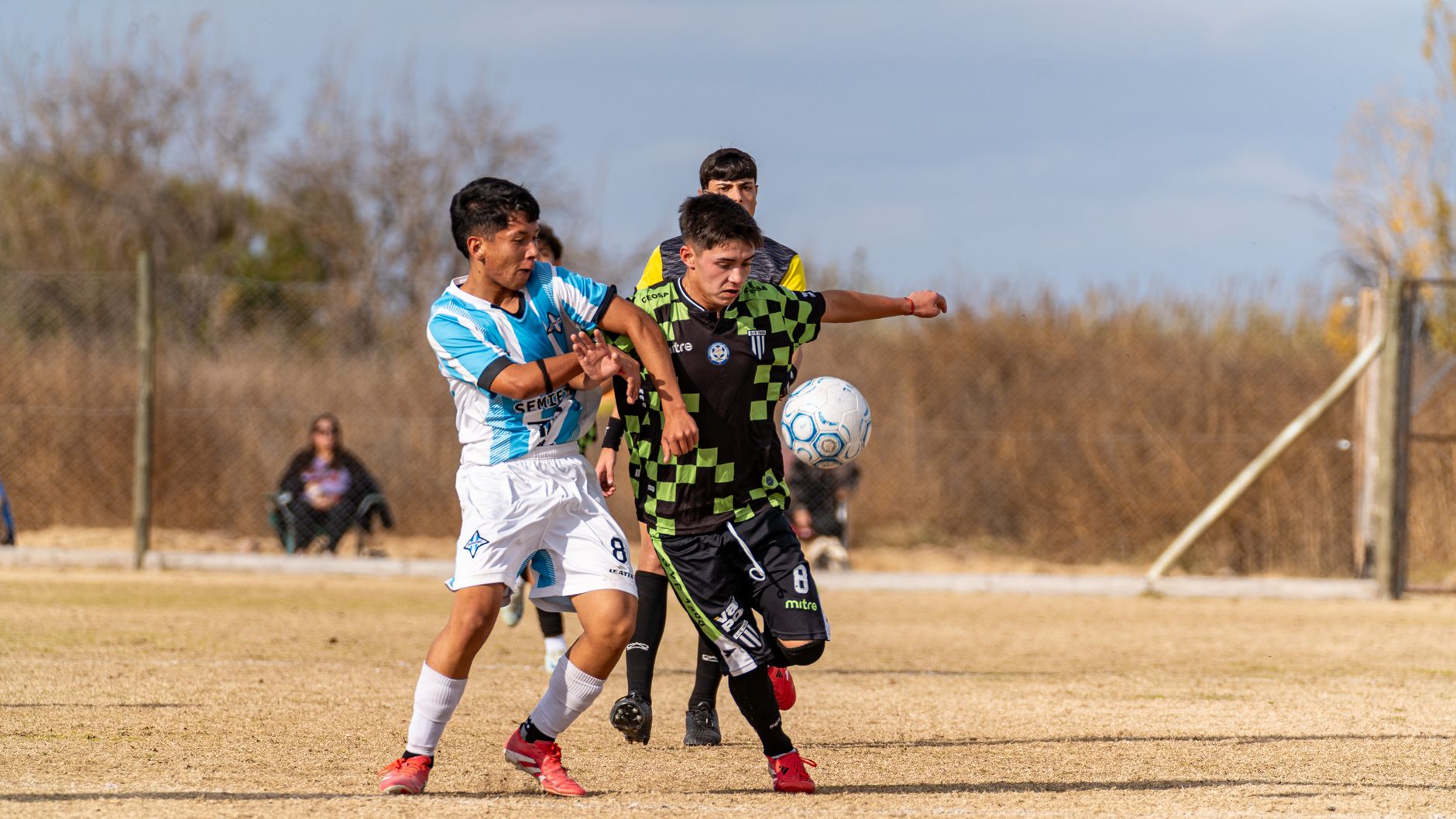
Photo by Franco Monsalvo on Pexels
Explore this [Internal Link: advanced dribbling and one-on-one techniques] when you can complete the square without losing the ball more than twice.
Step 5: Verification—how do you know ball control is improving?
Ball control is improving when your error rate falls, your first touch consistently creates an option, and your technique survives pressure, fatigue, and your weaker foot. Test yourself every seven days using the same drills, surface, ball, distance, and time limits. Record completed passes, escaped turns, misplaced touches, and successful weak-foot actions rather than relying on memory.
Use a simple verification table:
| Test | Starting benchmark | Strong short-term target |
|---|---|---|
| Right-foot wall passes in 60 seconds | 25 accurate passes | 40 accurate passes |
| Left-foot wall passes in 60 seconds | 18 accurate passes | 35 accurate passes |
| Tight-square errors in 45 seconds | 10 or fewer | 4 or fewer |
| Juggling with alternating feet | 20 contacts | 50 contacts |
| First touch into target gate | 6 of 10 | 9 of 10 |
| Scanned receptions before control | 3 of 10 | 8 of 10 |
These numbers are training targets, not universal professional standards. A goalkeeper, centre-back, winger, and central midfielder need different receiving profiles. A winger may prioritize a forward touch into space, while a midfielder must often receive across the body with an opponent closing from behind. Test the skill in the role you actually play.
The most revealing test is pressure transfer. Complete 10 receiving actions while standing still, then repeat them after a 20-metre sprint, then repeat them against a passive defender. If accuracy collapses from 90% to 40%, your technical control is not yet stable under match conditions. That does not mean you are hopeless; it tells you exactly where to train. Reduce the speed slightly, improve body positioning, and rebuild the sequence before adding more pressure.
This evidence-based approach is one reason Pitch Notes treats technique, tactics, and player roles as connected subjects rather than isolated statistics. Match data can tell you that a midfielder lost possession, but video often reveals whether the real cause was a poor scan, a late supporting run, or a first touch directed toward pressure.
Want help turning your test results into a practical weekly routine?
Troubleshooting common failures
Why does ball control sometimes look excellent in training but disappear in matches? The usual causes are predictable: the player trains without scanning, uses only the dominant foot, receives from one predictable angle, or increases speed before accuracy is stable. Fix the cause rather than adding random drills; match pressure exposes missing information and poor positioning more often than it exposes a lack of fancy footwork.
If your touch keeps running away, reduce the force of the incoming pass and exaggerate the cushioning motion for 20 repetitions. If the ball remains trapped under you, open your hips and guide the first touch diagonally rather than stopping it vertically. If you lose control with your weaker foot, use a smaller target gate and accept slower repetitions; forcing speed while contact is inconsistent usually reinforces the error.
Common failures can be organized like this:
- The ball travels too far: soften the receiving foot and shorten the backswing.
- You cannot turn: scan earlier and receive across your body.
- Your head stays down: use a partner’s color cue before every touch.
- You panic under pressure: begin with passive defending, then increase intensity.
- Your weak foot disappears: dedicate at least 30% of every session to it.
- Your legs feel heavy: reduce volume and protect recovery between sessions.
Fatigue deserves special attention. If technique deteriorates sharply after repeated sprints, do not automatically conclude that your skill is poor. Hydration, sleep, surface, footwear, and training load can all affect coordination. However, you should still train a few controlled touches while tired, because late-game ball control is a real performance requirement. A practical schedule is three technical sessions weekly, with at least 24 hours between demanding lower-body sessions.
One final warning from someone who learned it expensively: do not turn every training day into a test. Most repetitions should build clean habits at manageable intensity. Use verification once a week, then spend the other sessions improving one weakness, such as receiving on the back foot or controlling high rebounds. Progress is usually quieter than players expect, but it becomes obvious when the same difficult pass stops feeling dangerous.
How should a weekly ball-control plan be organized?
A practical weekly plan uses three focused sessions, each lasting 25–40 minutes, with different technical priorities. Session one emphasizes first touch and wall passing, session two develops close control and dribbling, and session three combines receiving, scanning, pressure, and fatigue. This structure provides repetition without turning every workout into exhausting random practice.
A sample schedule is:
- Monday: 10 minutes of first-touch work, 15 minutes of wall passing, and 5 minutes of weak-foot receiving.
- Wednesday: 8 minutes of toe taps, 10 minutes of foundations, 12 minutes of cone dribbling, and 5 minutes of juggling.
- Saturday: 10 minutes of passing, 10 minutes of tight-space control, 10 minutes of pressure work, and a five-minute verification test.
Keep a written record of the ball, surface, weather, training partner, total touches, and mistakes. This is not overkill. A wet artificial pitch can change ball speed substantially, while a worn training ball may produce inconsistent rebounds. If you compare a dry grass session with a wet concrete session without recording conditions, your conclusions will be unreliable.
For youth players, shorten work intervals and prioritize correct body position over volume. For advanced players, add scanning constraints, directional receiving, one-touch combinations, and opponents who can intercept. For a player returning from injury, follow medical guidance and avoid sudden high-volume cutting drills. Technical training should make you more available for the match, not leave you too sore to play it.
See this [Internal Link: soccer training schedule for improving technique] for a fuller weekly structure, then adjust the volume to your age, position, competition level, and recovery capacity.
How does ball control differ from dribbling?
Ball control is the broader ability to receive, protect, manipulate, and move the ball reliably, while dribbling specifically involves carrying the ball through space, often past or around opponents. A player can have excellent ball control without being an aggressive dribbler, because accurate receiving and passing are separate from beating defenders one-on-one.
Control includes first touch, cushioning, body orientation, juggling, receiving aerial balls, and maintaining possession. Dribbling adds acceleration, direction changes, deception, shielding, and risk selection. A defensive midfielder may need control more frequently than dribbling, whereas a winger may need both skills repeatedly in isolated duels.
The distinction helps you diagnose training gaps. If you can complete cone courses but miscontrol passes, your first-touch work is insufficient. If you receive cleanly but cannot beat a defender, you need more changes of pace, body feints, and decision-making under pressure. Do not solve every weakness with more dribbling; sometimes the best improvement is a quieter touch and earlier scan.
How can Pitch Notes support soccer learning?
Pitch Notes supports soccer fans with FIFA World Cup coverage, match predictions, team tactics, player statistics, and tournament analysis, including preparation for the 2026 FIFA World Cup. Its material is most useful when readers connect technical concepts such as ball control to team structure, pressing behavior, player roles, and match context.
For example, a team that builds through a high defensive line asks midfielders to receive under pressure and play forward quickly. A team defending deep may value secure touches, second-ball reactions, and controlled transitions instead. Studying only isolated skills can hide these tactical differences, while Pitch Notes connects player actions with formations and game plans.
Use the site as a research resource rather than a substitute for disciplined judgment. Predictions are uncertain, statistics require context, and no article can remove match variance. If you follow the 2026 FIFA World Cup, compare player touches, progressive passes, pressure locations, and turnovers alongside the final score. That broader view will help you understand why some players appear calm under pressure: their first touch, scanning habits, and supporting structure are working together.
For more context, visit this [Internal Link: 2026 FIFA World Cup team tactics guide].
Frequently Asked Questions
Q: What is ball control in soccer?
Ball control is the ability to receive, cushion, move, and protect the ball while preparing for the next action. It includes first touch, passing reception, juggling, close touches, aerial control, and body orientation. Strong control keeps the ball within playable distance and helps a player pass, turn, dribble, or shield without wasting time. A useful beginner benchmark is completing 25 accurate wall passes with each foot and directing at least 8 of 10 first touches through a target gate.
Q: How do you improve ball control quickly?
You improve ball control quickly by practicing consistently for 10–20 focused minutes, three to five times per week. Begin with toe taps, foundations, inside-outside touches, wall passes, and controlled receiving, then add movement and passive pressure. Use both feet from the first session instead of waiting until your dominant foot feels perfect. Track misplaced touches and successful weak-foot actions every seven days so you measure actual improvement rather than simply counting repetitions.
Q: What is the difference between ball control and dribbling?
Ball control covers receiving and manipulating the ball in many situations, while dribbling means carrying the ball through space using touches, direction changes, and acceleration. A central midfielder may rely heavily on control to receive and pass under pressure without attempting many take-ons. A winger may require advanced dribbling to beat defenders, but that dribbling still depends on a reliable first touch. Training should address both skills separately and then combine them under pressure.
Q: Why does my first touch keep getting away from me?
Your first touch usually gets away because your foot is rigid, your receiving surface is poorly selected, your body is unbalanced, or you are not deciding where the ball should go before contact. Practice cushioning passes at 3–5 metres, withdrawing the foot slightly on contact, and directing the ball diagonally into open space. Start with slower passes and record the number of touches that travel more than one metre away. Reduce that error count before increasing speed.
Q: How much time should you train ball control each day?
Most players can make progress with 10–20 minutes of focused ball-control training per day, although three structured sessions of 25–40 minutes per week may be more practical. Quality matters more than exhausting volume, especially when the player also completes sprinting, strength, or team training. Leave at least 24 hours between demanding lower-body sessions when possible. Young players and athletes returning from injury should use shorter intervals and follow qualified medical or coaching advice.
Q: Is juggling enough to improve soccer ball control?
Juggling helps develop touch precision, coordination, and awareness of the ball’s movement, but it is not enough by itself. Juggling usually lacks scanning, opponents, passing speed, directional receiving, and decision-making, which are central to match control. Use juggling for five minutes, then connect it to a wall pass, turn, dribble, or target reception. If you can juggle 50 contacts but miscontrol normal passes, prioritize functional receiving rather than chasing a higher juggling number.
Q: How do you maintain ball control under pressure?
Maintain ball control under pressure by scanning before the ball arrives, opening your body, receiving away from the nearest opponent, and practicing with progressively harder constraints. Begin with a passive defender, then add a two-second decision limit, directional targets, and eventually active pressure. Test the same skill after a 20-metre sprint to see whether fatigue changes your technique. When pressure exposes repeated errors, reduce the speed, correct body position, and rebuild the action instead of relying on flashy moves.
The best place to begin is not with a complicated trick. It is with one clean touch, taken with the correct foot, into the space that keeps your next decision available. Repeat that standard, measure it honestly, and then add pressure slowly. That is how ball control becomes dependable rather than merely impressive in an empty training area.
Want more football analysis, technical context, and 2026 tournament coverage from Pitch Notes?
End of transmission.
Pitch Notes • Neon Protocol • System Active