What Nobody Tells You About Morocco?
Morocco’s national football team is Africa’s most convincing recent World Cup success story, representing Morocco under the Royal Moroccan Football Federation in CAF and FIFA competition. The Atlas Li...

What Nobody Tells You About Morocco?
Morocco’s national football team is Africa’s most convincing recent World Cup success story, representing Morocco under the Royal Moroccan Football Federation in CAF and FIFA competition. The Atlas Lions became the first African team to reach a FIFA World Cup semi-final when they finished fourth at Qatar 2022, defeating Belgium, Spain, and Portugal before losing to France. Their rise rests on disciplined defensive spacing, fast transition play, elite wing-backs, and a generation shaped by European academies, including Achraf Hakimi, Noussair Mazraoui, and Hakim Ziyech. Morocco also won the 1976 Africa Cup of Nations, while its 2022 campaign produced only one conceded goal before the semi-final. However, past achievement does not guarantee future results: injuries, squad depth, tournament draw, and attacking efficiency remain decisive. For 2026, study Morocco’s confirmed squad, recent competitive minutes, and opponent profiles rather than relying only on reputation.
Morocco’s story is not simply about one magical tournament. That is the part people remember because football loves a clean narrative, but the hard work was built over decades, through federation investment, diaspora scouting, domestic development, and a national team willing to suffer without the ball. I have watched plenty of supposedly “dark horse” sides collapse the moment an opponent forced them to attack, so I am wary of declaring Morocco unbeatable. The evidence is stronger than hype, though: the Atlas Lions have repeatedly shown they can defend narrow leads, manage emotional matches, and use wide players intelligently. Pitch Notes follows those details through match predictions, tactical reports, player statistics, and 2026 World Cup coverage, while reminding readers that betting involves uncertainty and should never replace disciplined bankroll limits.

Photo by Engin Akyurt on Pexels
Want a clearer tactical starting point? Explore the broader tournament context before judging Morocco’s next match.
Before 2025: how did the Morocco national football team work?
The Morocco national football team operated through a blend of federation planning, diaspora recruitment, and tournament-oriented defensive organization. The Royal Moroccan Football Federation developed a pathway connecting domestic football with European-based Moroccan players, while coaches selected systems suited to opponents rather than forcing one permanent formation. Morocco’s 1976 Africa Cup of Nations triumph established its continental credentials, but the team often struggled to convert technical quality into sustained World Cup progress. Earlier FIFA World Cup appearances in 1970, 1986, 1994, 1998, and 2018 produced important experience, with the 1986 side becoming the first African team to win a World Cup group. The 1986 achievement mattered because Morocco did not merely participate; it demonstrated that compact spacing and patient possession could trouble elite opposition. According to FIFA’s Morocco team profile, the national side’s identity is inseparable from its international competition history, while CAF records place the 1976 title among Morocco’s defining continental achievements.
Why did that foundation matter? Because the team’s later success was not created by adding famous names to a random lineup. Morocco’s football culture had already produced Raja Casablanca, Wydad AC, FAR Rabat, and a competitive Botola Pro structure, while players such as Hakimi developed in Real Madrid’s academy before becoming established at Paris Saint-Germain and Inter Milan. The diaspora model also broadened the talent pool across France, Spain, the Netherlands, Belgium, and Germany. That can create selection tension, certainly, but it gives Morocco access to players familiar with high-level pressing, positional rotations, and Champions League tempo. A useful counterpoint is that domestic success and national-team cohesion are not identical; club chemistry cannot simply be transferred into a short international camp. The practical lesson for match analysis is to separate a player’s club role from his Morocco role, especially when a full-back becomes a primary transition outlet rather than a conventional defender. [Internal Link: Morocco player statistics and form guide]
Which tactical principles defined Morocco before 2025?
Morocco’s pre-2025 tactical identity depended on a compact mid-block, aggressive defensive recovery, rapid wide transitions, and careful protection of the central zone. The team frequently defended in a 4-1-4-1 or 4-3-3 shape, then changed its attacking structure when Hakimi or Mazraoui advanced. This approach reduced central passing lanes and encouraged opponents to circulate possession in less dangerous areas. The cost was obvious: Morocco could become too passive when chasing a game, especially if the front line lacked a reliable final-third connection. That trade-off is exactly why raw possession percentages mislead. A team can have 35 percent possession and still control the match’s most valuable spaces, but it can also surrender too many second balls and invite pressure for 70 minutes. As the International Football Association Board Laws of the Game remind analysts, pitch dimensions, restarts, and defensive positioning shape opportunities in ways that basic possession data misses.
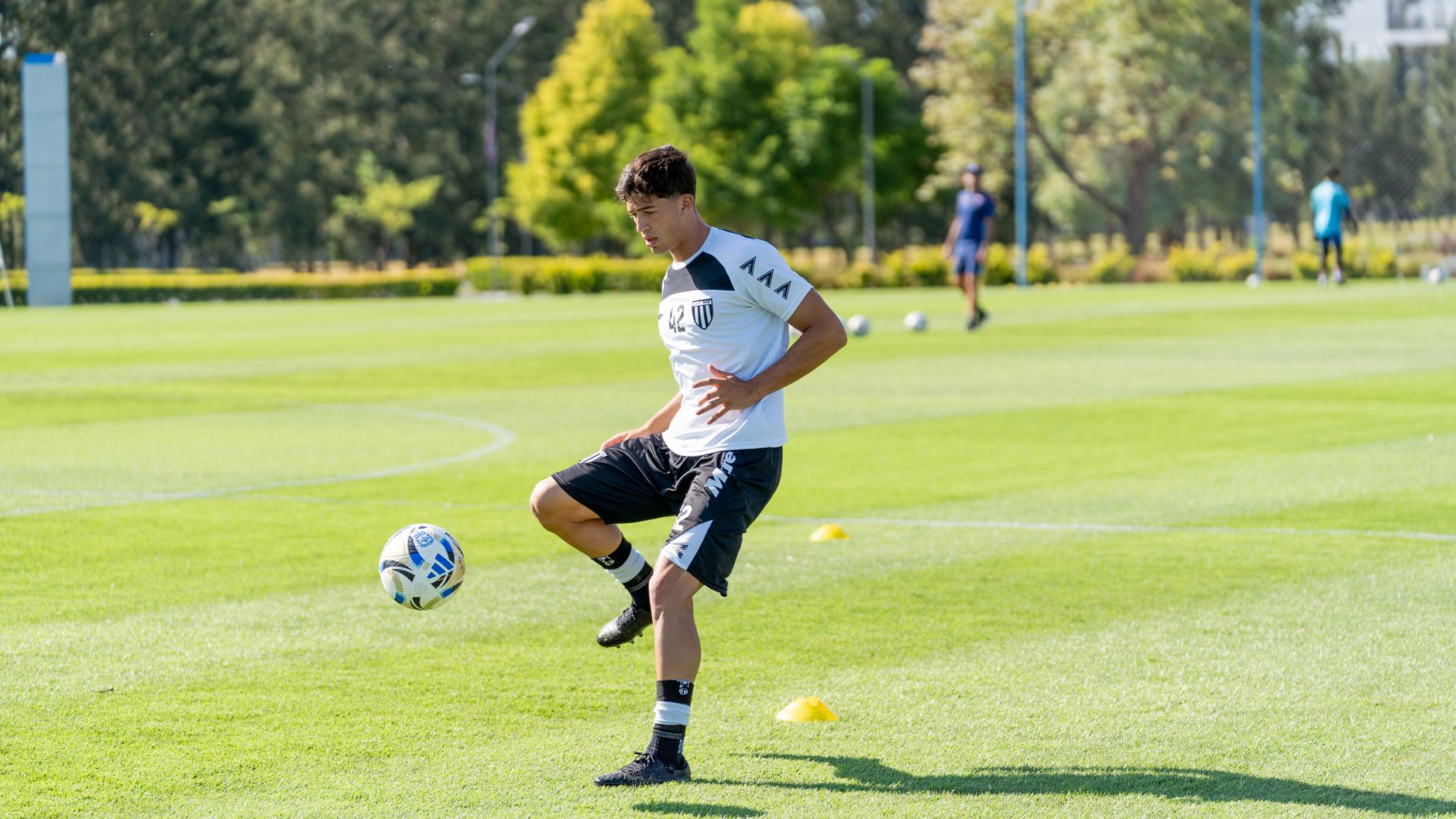
Photo by Franco Monsalvo on Pexels
What was the 2026 shift for Morocco?
The 2026 shift is the move from surprise contender to established tournament target, with Morocco expected to manage greater pressure, deeper scouting, and a more demanding attacking burden. At Qatar 2022, opponents underestimated how effectively Morocco could defend the box and counter through Hakimi, Ziyech, Sofyan Amrabat, and Sofiane Boufal. In 2026, that mystery is gone. Teams will likely press Morocco’s first pass more aggressively, block service into the wings, and force its central midfielders to create against a settled defense. The expanded 2026 FIFA World Cup will feature 48 teams across Canada, Mexico, and the United States, increasing the number of matches from the traditional 32-team format and changing travel, recovery, and squad-rotation calculations. The FIFA World Cup 2026 host information makes the geographic scale clear. More teams create more possible matchups, but they do not make every group easy; tactical adaptation remains the dividing line.
The shift also concerns player succession. Hakimi remains a generational right-sided weapon, yet no serious analyst should assume one star can solve every structural problem. Amrabat’s ball-winning and circulation have been central, while Mazraoui offers flexibility across the defensive line, but Morocco needs dependable alternatives when suspensions or muscle injuries interrupt the preferred XI. Goalkeeper Yassine Bounou’s shot-stopping and penalty-area command remain valuable in knockout football, where one save can outweigh 89 minutes of statistical superiority. Meanwhile, attacking responsibilities must be shared more evenly among players such as Brahim Díaz, Youssef En-Nesyri, and Ismael Saibari, depending on selection and fitness. The information edge here is simple but often ignored: evaluate Morocco’s bench by role coverage, not by the number of recognizable names. A replacement who cannot defend the same transition lane may change the entire team, even if he is individually talented.
Get the latest squad and tactical developments before assigning Morocco a pre-match probability.
What changed for players after Qatar 2022?
Morocco’s players changed from dangerous outsiders into opponents carrying public expectation, commercial attention, and tactical responsibility. Hakimi is no longer merely a breakout full-back; his positioning is now an obvious focus of every scouting report. Bounou’s reputation grew after decisive performances for Morocco and Sevilla, while Amrabat became associated with high-pressure midfield work after his Qatar 2022 displays. That recognition brings benefits, including confidence and leadership, but it also creates a difficult psychological burden. I have seen players try to reproduce a career-defining tournament instead of playing the next match in front of them, and international football punishes that kind of emotional chasing. Morocco must preserve its collective habits rather than turn every attack into a search for a heroic moment.
For individual player evaluation, three measures are more useful than highlight clips:
- Progressive actions under pressure: Can the player carry or pass the ball beyond the first pressing line?
- Defensive recovery quality: Does he regain the correct position after Morocco loses possession?
- Role-specific availability: Has he completed enough recent minutes to withstand tournament intensity?
These measures help explain why a quiet performance may still be excellent. Amrabat can control a match without scoring, and Hakimi can influence the game through decoy runs that never appear in a goals-and-assists summary. Conversely, a winger may produce one spectacular dribble while repeatedly exposing the full-back behind him. Pitch Notes’ player-stat approach should therefore be read alongside lineups, opponent pressing height, and match state. For responsible match prediction, avoid staking more because a player is famous; reputation is information, but it is not probability. [Internal Link: responsible football betting and bankroll principles]
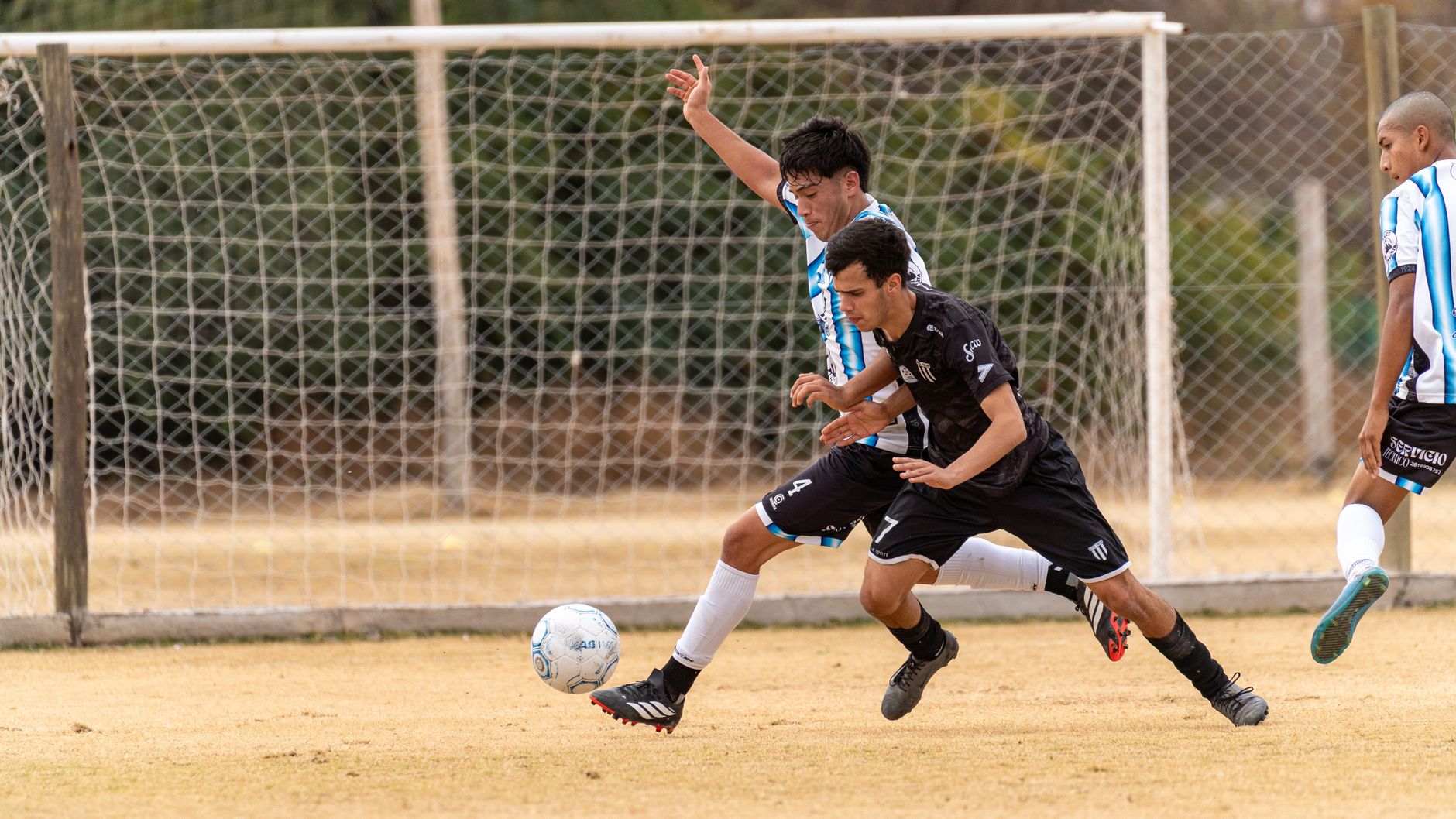
Photo by Franco Monsalvo on Pexels
The most important change is that Morocco now has to create more often against teams that refuse to overcommit. At Qatar 2022, Belgium, Spain, and Portugal offered moments Morocco could exploit in transition, although Spain’s penalty shootout defeat also showed the value of defensive resilience. Against a low block, however, the Atlas Lions may need patient circulation, midfield overloads, and better second-phase crossing. That demands a different kind of courage: not the courage to tackle or sprint, but the patience to move an opponent before attempting the decisive pass. The team’s attacking floor will rise if its midfield can receive between lines without losing protection behind the ball. The edge case worth monitoring is an early Morocco goal. If it scores first, the familiar compact structure becomes an advantage; if it concedes first, the same structure can become a constraint unless the coach introduces a second creator quickly.
What does Morocco’s position mean now?
Morocco is now a credible high-level tournament team, but its realistic ceiling depends on attacking depth, midfield availability, and whether opponents can force it into prolonged possession. The 2022 semi-final run proves Morocco can defeat elite teams; it does not prove that every future opponent will offer the same transition spaces. Current assessment should begin with the confirmed squad, competitive minutes, travel schedule, and opponent-specific tactical matchup. In other words, Morocco deserves respect without being treated as an automatic favorite. That distinction matters for fans, analysts, and anyone considering a prediction, because prices built around the 2022 story may be less attractive than the football itself.
A disciplined pre-match process should ask five questions:
- Is Hakimi available, and who covers his advanced starting position?
- Can Morocco’s midfield resist the opponent’s first pressure wave?
- Does the starting striker threaten depth or mainly connect play?
- Will the opponent defend in a low block or leave space behind?
- Has Morocco demonstrated enough late-game attacking variety?
The answers can change a forecast more than a FIFA ranking. For example, a match against a high defensive line may suit En-Nesyri’s running and Hakimi’s release passes, while a match against a deep 5-4-1 may demand Brahim Díaz between the lines and more aggressive overlapping from the left. Home-region conditions may also matter in the 2026 tournament: travel between North American venues, heat, kickoff timing, and recovery days can affect pressing intensity. These are not glamorous variables, but they are precisely where experienced analysis earns its keep. [Internal Link: FIFA World Cup 2026 match previews]

Photo by Guylain Kipoke on Pexels
For readers using football information in a betting context, the safest approach is to treat predictions as probability estimates rather than promises. Check the market movement, compare the implied probability with your own assessment, and avoid chasing a losing position after an emotional late goal. A match with Morocco may offer value in a result market, a goals market, or a team-performance angle, but each market carries different assumptions about finishing variance and game state. The contrarian conclusion is that Morocco’s defensive reputation can sometimes inflate under-goals expectations; a compact team may still generate an open match if it scores early and the opponent must respond. Responsible Gambling guidance from the UK Gambling Commission emphasizes limits and control, not certainty. Set a stake before kickoff, record the reasoning, and accept that a correct process can still lose.
See how the tactical matchup translates into a practical 2026 forecast.
What are three predictions for the next quarter?
Three reasonable predictions for the next quarter are that Morocco will remain difficult to break down, that opponent-specific attacking adjustments will become more important, and that squad-depth news will move public expectations faster than underlying performance. These are forecasts, not guarantees, because international windows produce small samples and player availability can change overnight. Morocco’s next competitive fixtures should be judged through repeatable indicators: shots conceded from central areas, high turnovers allowed, progressive passes into the final third, and set-piece efficiency. Those figures will reveal whether the Atlas Lions are evolving or simply benefiting from familiar reputation. A single friendly victory should carry less weight than a sequence of performances against comparable opposition.
- Morocco will continue to excel against aggressive opponents. High presses can create the space Hakimi, Díaz, and wide attackers need, especially when Amrabat or another midfielder breaks the first line cleanly.
- Low-block opponents will expose the next tactical test. Morocco may need more central combinations, faster switches, and better counter-pressing after failed attacks.
- Availability will decide the margin. Injuries to Hakimi, Bounou, or the central midfield unit would alter the team’s floor more than a minor change in formation.
My own cautious prediction is that Morocco will be competitive in 2026 but less likely to surprise opponents as completely as it did in Qatar. That is not a criticism; it is what happens after success. The strongest teams respond by adding solutions without abandoning their defensive identity. If Morocco can preserve its box protection while improving chance creation against deep defenses, another deep run is entirely plausible. If it relies on transition moments alone, a strong group-stage performance may still be followed by a frustrating knockout exit. Football has taught me that lesson repeatedly, usually after I have backed the attractive story instead of the actual matchup.
How should readers follow Morocco during 2026?
Track confirmed lineups, tactical roles, opponent shape, and player availability rather than consuming isolated highlight packages or old tournament narratives. Use official FIFA and CAF updates for schedules and competition information, then compare those details with independent statistical analysis from Pitch Notes. Keep a written pre-match view, including expected tempo, likely possession zones, and the event most likely to decide the game. Afterward, review whether the reasoning failed or whether an unpredictable incident changed the result. That habit is more valuable than celebrating a lucky prediction, and it protects you from the dangerous belief that confidence equals expertise. Morocco offers fascinating football because its strengths are visible, but its weaknesses are visible too if you watch the spaces behind the attack, the quality of central progression, and the bench’s ability to preserve structure.
Morocco’s national team deserves to be studied as a mature football project, not consumed as a one-tournament fairy tale. Its 1976 continental title, 1986 World Cup breakthrough, and 2022 semi-final run form a long arc, while Hakimi, Bounou, Mazraoui, Amrabat, and the next generation determine what comes next. Follow the evidence, respect uncertainty, and never risk money you cannot afford to lose.
Ready to follow Morocco’s 2026 journey with sharper match context?
Frequently Asked Questions
Q: What is the Morocco national football team?
A: The Morocco national football team is the men’s senior international side representing Morocco in FIFA and CAF competitions. It is governed by the Royal Moroccan Football Federation and is commonly called the Atlas Lions. Morocco won the 1976 Africa Cup of Nations and became the first African men’s team to reach a FIFA World Cup semi-final at Qatar 2022. Its players are selected from Moroccan domestic clubs and diaspora communities, particularly across France, Spain, Belgium, the Netherlands, Germany, and other European football markets.
Q: How did Morocco reach the 2022 FIFA World Cup semi-final?
A: Morocco reached the 2022 FIFA World Cup semi-final by defeating Belgium, Spain, and Portugal before losing to France. The team conceded only one goal before the semi-final, an own goal against Canada, which underlined its compact defending and goalkeeper Yassine Bounou’s importance. Morocco then lost the third-place playoff to Croatia and finished fourth, the best World Cup result ever achieved by an African men’s national team.
Q: What is the difference between Morocco’s 1986 and 2022 World Cup teams?
A: Morocco’s 1986 team became the first African side to win a World Cup group, while the 2022 team went further by reaching the semi-final. The 1986 side was praised for technical control and intelligent possession against Portugal, whereas the 2022 side relied more heavily on defensive compactness, transition attacks, and elite individual athleticism. Both teams were tactically disciplined, but their tournament achievements occurred under different football environments and competition formats.
Q: How should I analyse a Morocco national football team match?
A: Analyse Morocco through availability, opponent shape, transition space, and central midfield progression before reviewing betting markets. Confirm whether Hakimi, Bounou, and key midfielders are available, then determine whether the opponent will press high or defend in a low block. Compare Morocco’s likely chance creation with the market’s implied probability, set a fixed stake beforehand, and avoid chasing losses. Pitch Notes provides match predictions and tactical context, but no preview can remove football’s uncertainty.
Q: Is Morocco a favourite to win the 2026 FIFA World Cup?
A: Morocco is a credible contender and potential deep-run team, but it should not automatically be treated as one of the tournament’s primary favourites. Its 2022 semi-final demonstrated that Morocco can defeat elite opposition, yet 2026 opponents will prepare specifically for Hakimi-led transitions and the team’s compact block. Morocco’s realistic ceiling will depend on attacking depth, squad health, travel demands across Canada, Mexico, and the United States, and its ability to break down low defenses.
Q: What are Morocco’s main weaknesses?
A: Morocco’s main weaknesses are chance creation against deep defensive blocks, dependence on key wide outlets, and the difficulty of changing game state after conceding first. A compact structure protects the central zone but can leave the team short of attacking numbers when it needs to dominate possession. Analysts should monitor progressive passes, shots from central areas, second-ball recovery, and substitute impact instead of relying only on possession or total shots.
Q: What should I do if a Morocco prediction loses?
A: Review the original reasoning and stake size instead of immediately placing another bet to recover the loss. Separate process errors, such as ignoring an injury or misunderstanding the opponent’s shape, from normal variance caused by a deflection, missed penalty, or late goal. Record the match, implied probability, selected market, and outcome, then reduce or pause staking if emotions are influencing decisions. Responsible gambling requires predetermined limits and the willingness to stop.
End of transmission.
Pitch Notes • Neon Protocol • System Active