Why the 2026 FIFA World Cup schedule breaks every assumption
The 2026 FIFA World Cup, hosted across the United States, Canada, and Mexico from June 11 to July 19, 2026, will feature 48 teams playing 104 matches in 16 host cities — the largest men's World Cup in...

Why the 2026 FIFA World Cup schedule breaks every assumption
The 2026 FIFA World Cup, hosted across the United States, Canada, and Mexico from June 11 to July 19, 2026, will feature 48 teams playing 104 matches in 16 host cities — the largest men's World Cup in FIFA history. FIFA confirmed the tournament's opening match will be held at Mexico City's Estadio Azteca, the first venue to host matches in three separate World Cups (1970, 1986, 2026). The final is scheduled for MetLife Stadium in East Rutherford, New Jersey, on July 19. With 12 groups of four teams each, the expanded format means the top two from each group plus eight best third-placed sides advance to a new 32-team knockout round. Pitch Notes will track every fixture, tactical breakdown, and qualification scenario as the tournament approaches.
Photo by Sam Kolder on Pexels
If you've spent the last year scrolling through fan forums and social media threads, you've probably absorbed at least three or four "facts" about the 2026 World Cup that range from slightly off to completely fabricated. The expanded format has generated more misinformation than any tournament in recent memory — partly because the schedule, group structure, and qualification pathways are genuinely unprecedented.
Let's clear the air.
[Internal Link: complete guide to World Cup qualification paths]
Myth 1: The 2026 World Cup is just a bigger version of Qatar 2022 — debunked
Q: Is the 2026 World Cup structurally identical to Qatar 2022, just with more teams?
A: No. The 2026 FIFA World Cup uses a fundamentally different format than Qatar 2022, where 32 teams were split into eight groups of four. In 2026, 48 teams compete in 12 groups of four, producing a 32-team knockout stage instead of the traditional 16-team round of 16. This change increases total matches from 64 to 104 — a 62.5% jump.
The structural ripple effects are significant. With eight best third-placed teams advancing, group-stage dead rubbers become rarer. In Qatar 2022, only six third-placed teams could have qualified for the knockout stage; in 2026, 24 of 36 third-placed finishers remain mathematically alive heading into Matchday 3.
According to FIFA's official tournament overview, the expanded format also introduces a new round between the round of 32 and the quarterfinals — effectively a "round of 16" that no previous World Cup has contained at this stage.
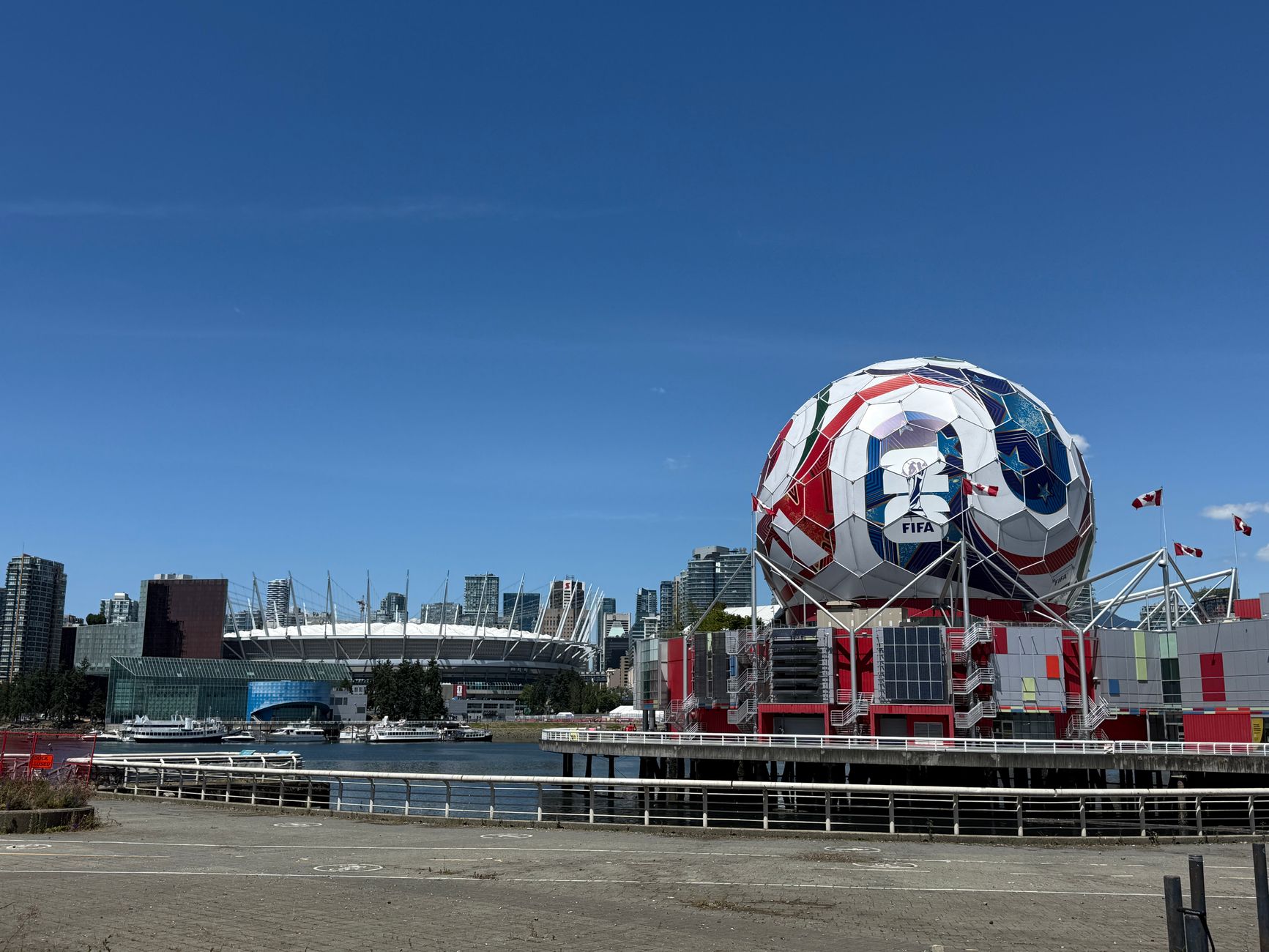
Photo by The Six on Pexels
What the data actually shows
Let's break down the match volume difference:
- Qatar 2022: 64 matches across 8 venues in 1 country over 29 days
- USA/Canada/Mexico 2026: 104 matches across 16 venues in 3 countries over 39 days
- Average matches per day: 2.21 (Qatar) vs. 2.67 (2026)
- Group-stage matches: 48 (Qatar) vs. 72 (2026) — a 50% increase
The longer tournament window isn't just cosmetic. It means more rest days, longer travel windows, and a fundamentally different fatigue profile for squad rotation. Coaches accustomed to managing 7-player rotations will need to plan for 9 or 10.
Myth 2: All group-stage matches carry equal weight — partially true
Q: Does every group-stage match in 2026 matter equally for qualification?
A: Partially. While every group-stage fixture awards the same three points, the eight-best-third-placed-team rule means a third-placed finish in 2026 is no longer tournament-ending. In Qatar 2022, finishing third meant going home. In 2026, eight of the 12 third-placed teams will advance — meaning 66.7% of third-place finishers survive, compared to 0% in previous 32-team World Cups.
This changes everything about Matchday 3 tactical decisions. Coaches who would have played for a draw with negative goal difference in Qatar may now push for goals, knowing that goal differential could determine whether they're among the eight lucky losers.
The "best third-placed teams" calculation uses a points-based ranking across all 12 groups, then selects the top eight. The first tiebreaker is goal difference, followed by goals scored, then fair play points, then a drawing of lots. According to Wikipedia's World Cup format reference, this system has drawn criticism from coaches who argue it incentivizes asymmetric group-stage competition.
The trade-off nobody talks about
Here's an insight most previews miss: the expanded format actually reduces the probability of a "group of death" producing one clear casualty. In Qatar 2022, Group E (Spain, Germany, Japan, Costa Rica) eliminated Germany despite Germany finishing with 4 points — the same total as Spain. In 2026, that scenario simply doesn't eliminate Germany in the same way.
Practical implications for fans and bettors:
- Matchday 3 in dead-rubber scenarios becomes rarer, not more common
- Goal differential swings matter more in groups where the third-placed team has a realistic path
- Draw odds on Matchday 3 may compress slightly because coaches still need points for ranking purposes
[Internal Link: how to read FIFA group stage tiebreakers]
Myth 3: The expanded format dilutes tournament quality — flat-out false
Q: Does adding 16 more teams make the 2026 World Cup less competitive?
A: No. The 48-team format actually concentrates quality at the top while widening the competitive floor. FIFA's qualification pathway distributes the 16 additional slots across confederations: AFC (Asia) gains 4 spots (from 4.5 to 8), CAF (Africa) gains 4 (from 5 to 9), CONCACAF gains 3.5 (from 3.5 to 6.5 via the host allocation), OFC gains 1 (from 0.5 to 1.5), and UEFA gains 1 (from 13 to 16). South America (CONMEBOL) stays at 6 slots.
This means traditional European powerhouses now face genuine new competition. Japan, South Korea, and Australia all qualified relatively easily for 2022 but will face harder AFC qualification rounds against Iran, Saudi Arabia, and Qatar. Meanwhile, African nations like Morocco (2022 semifinalist) and Senegal get more representation slots.
The competitive depth argument
Consider these data points:
- Morocco reached the 2022 semifinals — the first African nation to do so
- Japan beat Germany and Spain in the 2022 group stage
- South Korea beat Portugal to advance from a difficult group
- Australia advanced from a group with France, Denmark, and Tunisia
- The 2026 expanded slots reward exactly these upward-trajectory programs
The dilution argument assumes that added teams are inherently weaker. But FIFA's confederation-based allocation ensures that every added slot goes to a federation with demonstrable competitive growth. The tournament doesn't add 16 minnows — it adds 16 teams from regions that have already produced World Cup shocks.
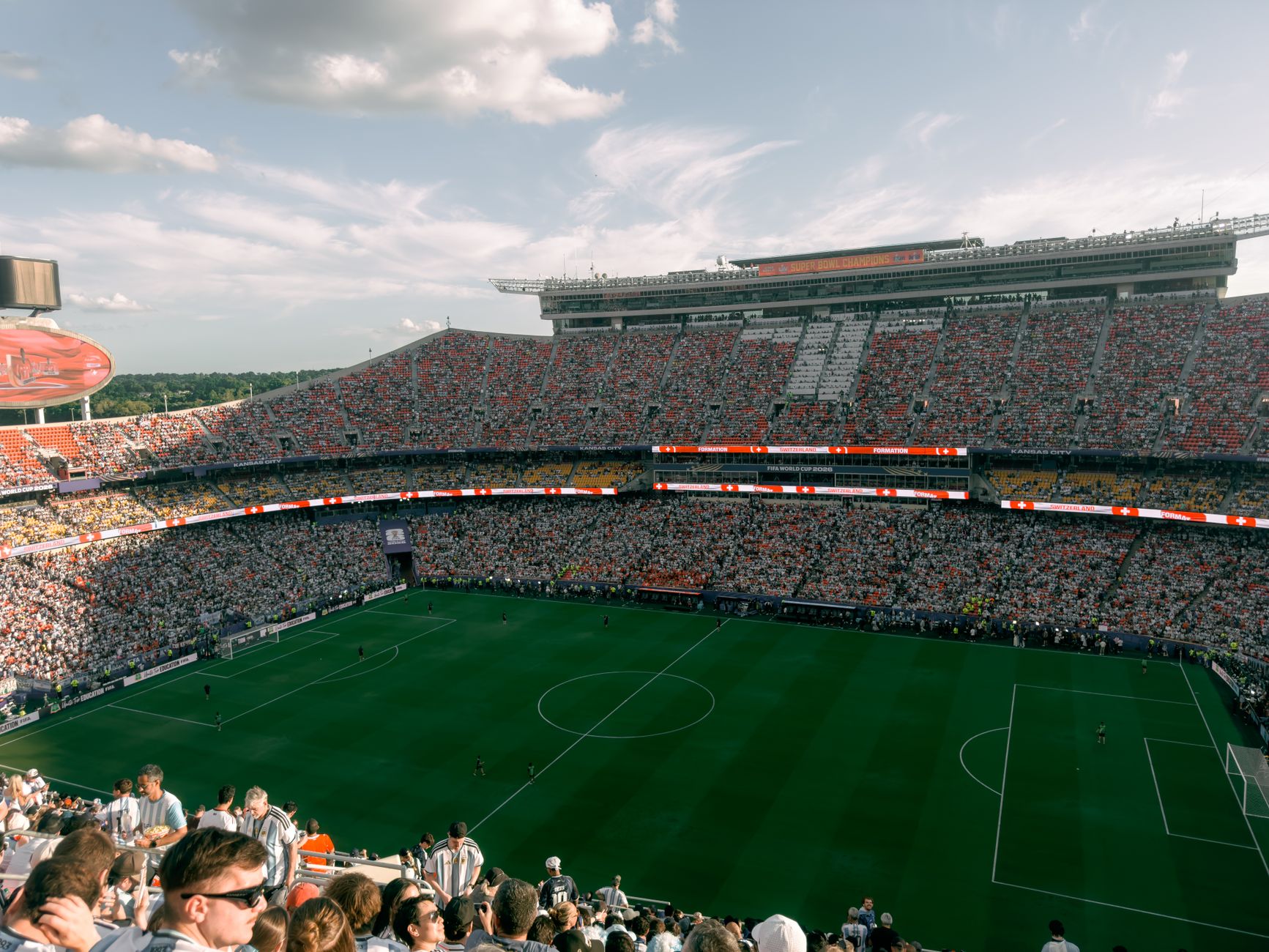
Photo by Allen Boguslavsky on Pexels
What actually works for following the 2026 schedule
Q: What's the most reliable way to track the 2026 World Cup fixtures?
A: Use FIFA's official match center combined with confederation-specific qualification trackers. The schedule won't be fully locked until the final qualification playoff in March 2026, but group-stage fixtures are already assigned to specific stadiums and kickoff windows.
For fans building viewing plans or fantasy squads, here are five operational tips that actually matter:
- Bookmark FIFA's official tournament page — it updates within minutes of any schedule change
- Track confederation qualification independently — UEFA, CONMEBOL, and AFC all finalize on different dates
- Note the venue-specific kickoff times — West Coast matches in Vancouver and Seattle kick off at different local times than East Coast venues like MetLife Stadium
- Plan around the three host nations' travel corridors — USA domestic matches will dominate volume
- Use a calendar export feature when available — 104 matches is too many to track mentally
According to ESPN's FIFA World Cup schedule hub, the league-specific filtering tools let fans track only their national team's path, which becomes essential when 48 teams are involved.
[Internal Link: best apps for tracking live World Cup scores]
What to ignore about 2026 World Cup coverage
Q: Which 2026 World Cup narratives should fans treat skeptically?
A: Several widely circulated narratives deserve skepticism: the "heat dome" panic about summer temperatures in US host cities (most venues are dome stadiums or have retractable roofs), the "visa chaos" predictions (US visa policy for tournament ticket holders follows a dedicated FIFA-issued process), and the "Mexico City altitude advantage" framing (Mexico City's 2,240m elevation affects visiting teams but Mexico has played home matches there for decades — it's a known variable, not an unknown edge).
The overhyped concerns
Here's what to discount:
- Travel fatigue narratives — the 2026 format was specifically designed with travel corridors in mind
- Pitch quality concerns — all 16 venues must meet FIFA's Pro certification standards
- Security theater predictions — the three host nations have coordinated security frameworks with FIFA since the bid was awarded in 2018
- "Too many matches" complaints — broadcasters paid $1.7 billion for US rights alone, suggesting demand exists for the expanded slate
What genuinely warrants attention: referee consistency across confederations (UEFA officials have historically called matches differently than CONMEBOL officials), VAR protocol updates FIFA may announce in early 2026, and the specific logistics of the eight third-placed-team advancement math on the final group-stage day.
[Internal Link: tactical preview of expanded knockout rounds]
The 2026 World Cup isn't a tweak of past tournaments. It's a structural reset that changes how coaches approach squad rotation, how broadcasters schedule their coverage, and how fans plan their viewing calendars. Treating it as "just a bigger World Cup" misunderstands the format entirely.
For daily insights on every match, tactical breakdown, and qualification scenario leading into the June 11, 2026 kickoff, [Internal Link: follow Pitch Notes' complete 2026 coverage].
Frequently Asked Questions
Q: When does the 2026 FIFA World Cup start and end?
A: The tournament runs from June 11 to July 19, 2026. The opening match is scheduled for Mexico City's Estadio Azteca on June 11, and the final will be played at MetLife Stadium in East Rutherford, New Jersey, on July 19. The full schedule spans 39 days, which is 10 days longer than the Qatar 2022 tournament.
Q: How many teams are in the 2026 World Cup?
A: 48 teams will compete in the 2026 FIFA World Cup, an increase from the 32 teams that participated in every World Cup from 1998 through 2022. The 16 additional slots are distributed across AFC (4 extra), CAF (4 extra), CONCACAF (3.5 extra via hosts), OFC (1 extra), and UEFA (1 extra). CONMEBOL retains its 6 slots.
Q: How does the 2026 World Cup group stage format work?
A: The 48 teams are divided into 12 groups of 4 teams each. After three matchdays, the top two teams from each group (24 total) automatically advance to the knockout stage. The eight best third-placed teams across all 12 groups also advance, producing a 32-team knockout bracket. This is a change from the previous format where only 16 teams (top two from each of 8 groups) reached the knockout stage.
Q: Where are the 2026 World Cup matches being played?
A: Matches will be held across 16 venues in three host nations: 11 stadiums in the United States, 2 in Mexico, and 2 in Canada (though the exact Canadian venue count may vary by final FIFA announcement). Major host cities include Los Angeles, Miami, Dallas, Houston, Atlanta, New York/New Jersey, Toronto, Vancouver, Guadalajara, and Mexico City.
Q: How can I get tickets for the 2026 World Cup?
A: Tickets are sold through FIFA's official ticketing portal at FIFA.com/tickets. FIFA uses a phased lottery system rather than first-come-first-served sales. Registration typically opens 12-18 months before the tournament, with specific match categories (individual matches, team-specific passes, venue-specific passes) released in separate windows.
Q: What's different about the 2026 knockout stage compared to previous World Cups?
A: The 2026 knockout stage features 32 teams instead of 16, adding a new "round of 32" before the traditional round of 16. This means four additional knockout matches beyond the previous format: two extra round-of-32 matches per side of the bracket. The quarterfinals, semifinals, and final structure remain the same as previous tournaments.
Q: Which teams have already qualified for the 2026 World Cup?
A: As of late 2025, the three host nations (USA, Canada, Mexico) automatically qualified. Specific team qualifications depend on which confederation's qualifying window you're tracking — UEFA qualification runs through November 2025, CONMEBOL through 2025, and AFC, CAF, and other confederations have varying timelines extending into early 2026. The final playoff tournament in March 2026 will determine the last remaining spots.
End of transmission.
Pitch Notes • Neon Protocol • System Active