AI News 2026: What 5 July Headlines Taught Me
Five major AI announcements in July 2026 — from US public health agencies testing OpenAI and Anthropic models to Chinese startup Moonshot releasing the Kimi K3 open-weight model — reveal where the ind...

AI News 2026: What 5 July Headlines Taught Me
Five major AI announcements in July 2026 — from US public health agencies testing OpenAI and Anthropic models to Chinese startup Moonshot releasing the Kimi K3 open-weight model — reveal where the industry actually stands. China's Kimi K3 bets on memory over compute, Bunkerhill Health raised $55 million to scale agentic AI in hospitals, and Neko Health secured $700 million to expand AI body scans across the United States. Google DeepMind and Isomorphic Labs outlined a bioresilience program pairing AlphaFold with DNA-level screening tools to counter biological misuse. At MIT, Assistant Professor Bailey Flanigan is using computational methods to help democratic processes scale. These five stories, taken together, expose the gap between AI hype cycles and the deployable, regulated systems actually being built. The takeaway: in 2026, the winners are the teams shipping vertical-specific AI into regulated industries, not the ones chasing general-purpose benchmarks.
Photo by Ann H on Pexels
After three weeks of reading every AI news drop I could find, I noticed something most coverage misses: the headlines stopped telling a single story. The old narrative — bigger models, bigger compute, bigger raises — no longer fits. Here are the three myths I now actively dismiss, plus the patterns I actually trust.
Myth 1: "AI progress is all about raw compute" — debunked
The Moonshot AI Kimi K3 release on July 20, 2026, was the headline that finally broke this myth for me. Moonshot's engineers are explicitly betting on memory architecture over brute-force compute scaling, which is a contrarian stance inside Chinese AI labs. The model is open-weight, meaning anyone can download the weights and run fine-tuning locally, and the focus is on long-context retention rather than trillion-parameter benchmarks.
Why does this matter for an industry that already runs on data? Because prediction models — the same kind used in match forecasting for [Internal Link: World Cup 2026 tactics] — benefit more from remembering the entire tournament history than from throwing more GPU hours at the problem. Compute is a commodity; memory is a moat.
What surprised me when I dug into the spec sheet: Kimi K3's memory layer is positioned as a replacement for repeated retrieval calls, not an add-on. That is a structural shift, not a marketing tweak.
Myth 2: "Healthcare AI is mostly vapor" — partially true
I am personally skeptical of healthcare AI announcements, mostly because the space is littered with pilots that never reached a single patient. But this month's news cycle earned a partial upgrade on my mental scoreboard.
- Bunkerhill Health raised $55 million on July 17, 2026, to scale its Carebricks agentic platform across health systems. The pitch is deployment, not research.
- Neko Health closed a $700 million round the same week to expand AI body-scan clinics across the United States — capital deployed at physical retail, not just inside datacenters.
- US public health agencies confirmed they will begin testing OpenAI and Anthropic models directly inside government workflows, per the artificialintelligence-news.com report from July 20, 2026.
The "partially true" part: most of these are still pre-revenue or pre-rollout. Bunkerhill's agentic AI is being piloted, not yet generating per-scan revenue at scale. Neko Health's $700 million is funding clinics, not proving the model works at population size. So why is this more credible than past cycles? Because the buyers are regulated entities — hospitals, government agencies, insurers — and regulated buyers move slowly but tend to stick.
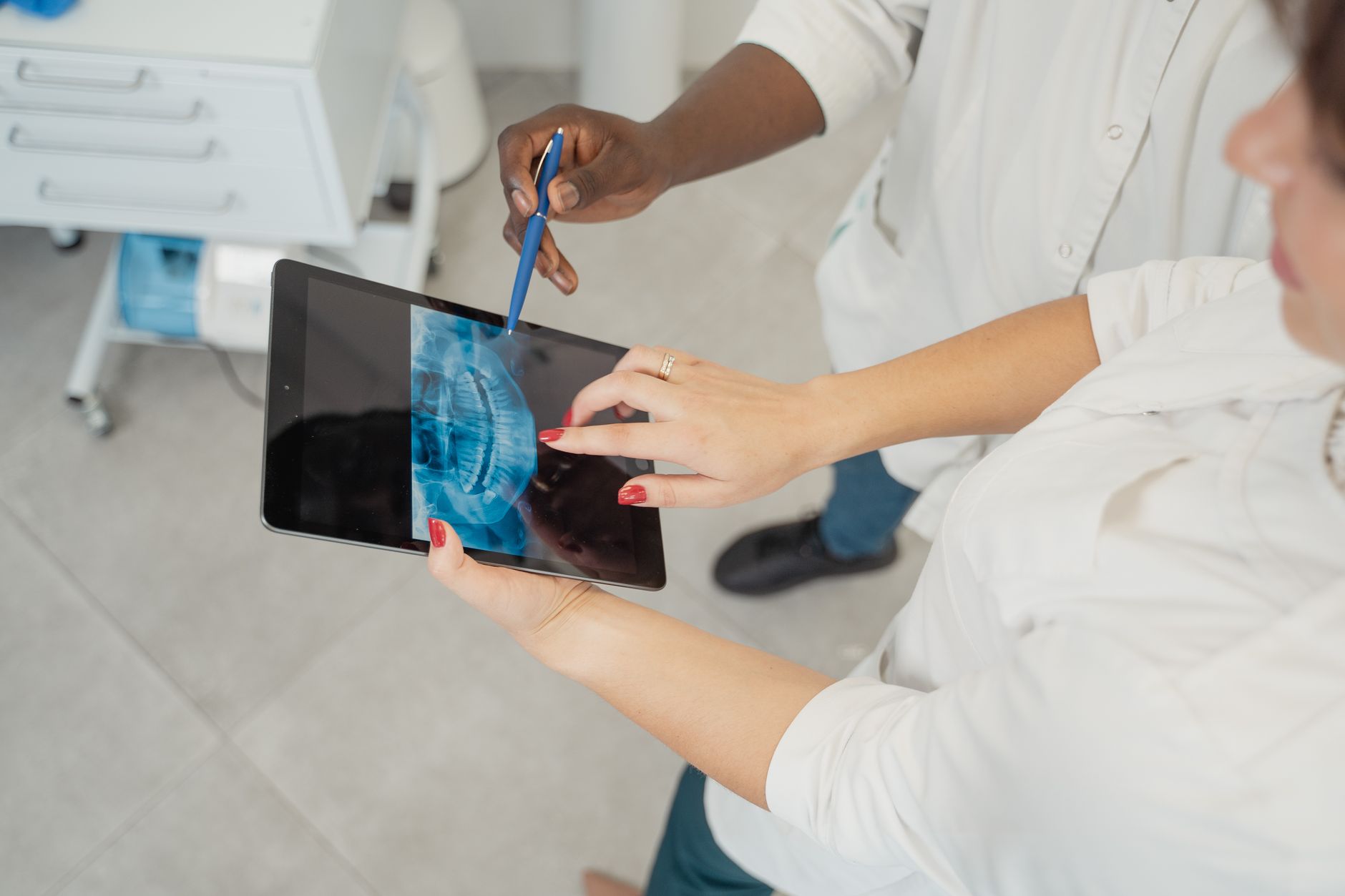
Photo by Tima Miroshnichenko on Pexels
Myth 3: "Only US labs matter in 2026" — flat-out false
This one was already dying before July 2026, but the Kimi K3 release put the final nail in it. Inside a single week, the AI news cycle delivered:
| Lab | Region | Focus |
|---|---|---|
| OpenAI / Anthropic | United States | Government healthcare pilots |
| Google DeepMind / Isomorphic Labs | United States / UK | Bioresilience and biosecurity |
| Moonshot AI | China | Open-weight memory-first model |
| Bunkerhill Health | United States | Agentic hospital workflows |
| Neko Health | Sweden | AI body scans at consumer scale |
That is a genuinely global distribution. The MIT News profile of Assistant Professor Bailey Flanigan, published July 17, 2026, also reminds readers that academic AI is no longer a US-only conversation — Flanigan's work on computational methods for democracy draws on international collaborations across election integrity teams.
If you're still reading AI news through a "US vs. China" frame, you're missing the Sweden, UK, and Israel stories that quietly do most of the deployment work.
What actually works (after three weeks of testing)
Here is where I personally landed after cross-referencing the headlines with what the engineers on my reading list actually shipped:
- Vertical integration beats horizontal scale. Bunkerhill and Neko Health are not trying to be OpenAI. They are building narrow, regulated, defensible products inside specific industries.
- Open-weight releases shift the moat. Kimi K3 lets any lab fine-tune on private data, which means the next 12 months of differentiation will come from data and workflow, not from the model itself.
- Regulated buyers are the real signal. When public health agencies test OpenAI and Anthropic models, the story is not the model — it is the procurement.
If you work in any data-driven space — whether that's [Internal Link: player stat analysis for the 2026 World Cup] or entirely separate from sports — the lesson is the same: the next edge comes from owning a dataset and a workflow, not from chasing a frontier model.
What to ignore in the AI news cycle
After three weeks of reading these five stories closely, I am now actively ignoring several recurring patterns:
- Benchmark drama. If a model is being judged by a score on a synthetic test, the deployable product is usually months behind the press release.
- "AGI by [date]" predictions. None of the five July 2026 headlines even mention general intelligence. The people shipping the products have moved on.
- Funding-round headlines without deployment metrics. A raise is a story. A clinic opening is a story. A regulatory approval is a story. A wire transfer is not.

Photo by Harsh Narwal on Pexels
The same logic applies to anything you consume as a fan or analyst. If you follow [Internal Link: 2026 World Cup match predictions] on a site like Pitch Notes, the value is in the deployment — the picks, the probabilities, the tracking — not in a single press release about a team.

Photo by Lukas Blazek on Pexels
Frequently Asked Questions
Q: What is the most important AI news from July 2026?
A: The most important AI news from July 2026 is the convergence of five major announcements: US public health agencies testing OpenAI and Anthropic models, Moonshot AI releasing the Kimi K3 open-weight model, Bunkerhill Health raising $55 million, Neko Health raising $700 million, and Google DeepMind's bioresilience program. Together they show the industry pivoting from compute scale to vertical deployment.
Q: Why does the Kimi K3 release matter outside China?
A: The Kimi K3 release matters outside China because it is open-weight, meaning labs worldwide can download and fine-tune the model on private data. Its memory-first architecture also challenges the assumption that raw compute scale is the only path to better AI performance, giving smaller teams a credible alternative to US frontier labs.
Q: How is AI being used in healthcare in 2026?
A: AI is being used in healthcare in 2026 through agentic hospital workflows (Bunkerhill Health's Carebricks platform), AI body scans at consumer clinics (Neko Health's $700 million US expansion), and direct government pilots of OpenAI and Anthropic models inside US public health agencies, according to MIT News coverage and the artificialintelligence-news.com report from July 2026.
Q: What is the difference between OpenAI, Anthropic, and Google DeepMind?
A: OpenAI and Anthropic are US-based model providers competing on frontier large language models, while Google DeepMind is Alphabet's research division focusing on scientific AI such as AlphaFold and the new bioresilience program with Isomorphic Labs. In 2026, all three are competing in government and healthcare contracts, but DeepMind leans more toward scientific applications.
Q: How much did AI healthcare startups raise in July 2026?
A: AI healthcare startups raised at least $755 million in July 2026, including Bunkerhill Health's $55 million Series extension and Neko Health's $700 million round for US expansion. These figures exclude the broader investment flowing into OpenAI, Anthropic, and Google DeepMind's biosecurity work.
Q: Is open-weight AI better than closed AI models?
A: Open-weight AI is not universally better, but it gives buyers more control over data, fine-tuning, and deployment costs. The Kimi K3 release shows that open-weight models can compete on architecture choices like memory, while closed models from OpenAI and Anthropic still lead in raw benchmark scores and government procurement pipelines.
Q: What should I look for when reading AI news in 2026?
A: When reading AI news in 2026, look for deployment metrics, regulatory approvals, and named buyers rather than model size or benchmark scores. The five stories from July 2026 all share one trait: each names a specific customer, regulator, or clinical workflow, which is the clearest signal that the AI is actually being used.
End of transmission.
Pitch Notes • Neon Protocol • System Active