American Football vs Soccer: 2026 Rule Structure
Ever watched a Super Bowl broadcast and wondered why the actual game action feels like 11 minutes stretched across four hours? Or caught a 2026 FIFA World Cup qualifier and felt lost in the continuous...
American Football vs Soccer: 2026 Rule Structure
Ever watched a Super Bowl broadcast and wondered why the actual game action feels like 11 minutes stretched across four hours? Or caught a 2026 FIFA World Cup qualifier and felt lost in the continuous flow without a single whistle break? You're not alone. The confusion stems from a fundamental design difference between American football and soccer, two sports that share a name origin but operate on completely different mechanical principles. At Pitch Notes, we cover the tactical side of football (soccer) extensively, yet we regularly receive questions from readers who want to understand both versions. This guide walks you through the structural comparison in five clear steps, plus a troubleshooting section for the misconceptions that trip people up most often.
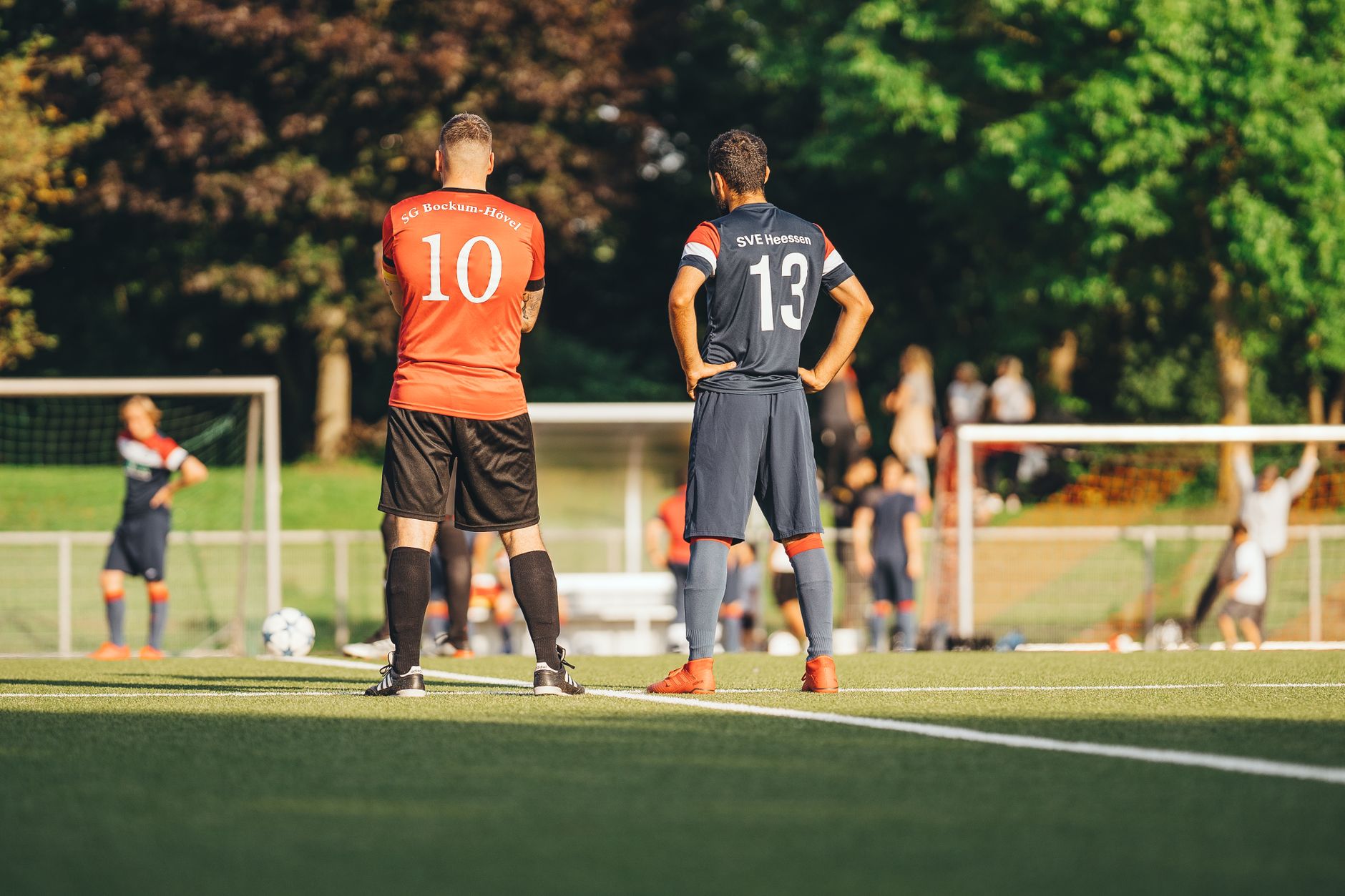
Photo by Omar Ramadan on Pexels
American football and soccer share a name origin but diverge sharply in structure. American football, codified in 1869 with the first intercollegiate game between Rutgers and Princeton, features 11 players per side on a 100-yard field with four 15-minute quarters. Soccer, governed internationally by FIFA since 1904 and culminating in events like the 2026 FIFA World Cup across the United States, Canada, and Mexico, fields 11 players on a pitch ranging 100-110 meters long with two 45-minute halves. The most visible contrast lies in how each sport advances the ball: American football uses a stop-start sequence of downs and discrete plays, while soccer flows continuously with passes and dribbling governed by the offside rule. Scoring also differs dramatically; a touchdown in American football equals six points versus a soccer goal's single point. For fans tracking both sports in 2026, understanding these structural differences clarifies why strategy, player conditioning, and viewing experiences feel worlds apart.
Step 1: Compare the Basic Rule Structure
American football operates on a down system: the offensive team gets four attempts (downs) to advance the ball at least 10 yards. Fail to reach the marker, and possession flips to the other team at the spot of the ball. This creates a chess-like sequence of strategic decisions on every single snap. Soccer, by contrast, uses continuous possession with no equivalent of downs. A team can hold the ball for an entire half without ever being forced to "convert" under threat of losing it. The only structural pressure in soccer comes from the offside rule and the 6-second goalkeeper release limit, neither of which functions like the down system.
This structural difference cascades into everything else. American football's average play lasts roughly 6 seconds of action followed by 30-40 seconds of reset, according to NFL timing data. Soccer's clock runs continuously except for the referee's added time at the end of each half. If you're new to either sport, start here: understand that American football is a series of isolated decisions, while soccer is a continuous negotiation for spatial advantage. Our [Internal Link: football tactics guide] explains how this continuous flow shapes World Cup strategy.
Step 2: Decode the Scoring Systems
Why does an American football game routinely hit 50+ total points while top-tier soccer matches like a UEFA Champions League final might end 1-0? The answer lies in scoring frequency and method. American football awards six points for a touchdown, one or two extra points for the conversion, three points for a field goal, two points for a safety, and six for a defensive touchdown. A single drive can produce 6-8 points. Soccer awards one point per goal, with no equivalent of the extra-point conversion or field goal. To score, the entire ball must cross the goal line between the posts and under the crossbar, per FIFA's Laws of the Game.
Here's an insight most comparison articles miss: the rarity of goals in soccer is not accidental. FIFA's Law 10 requires the whole ball to cross the line, which statistically suppresses scoring rates compared to sports where any portion of the ball crossing the plane counts. American football's looser scoring criteria, combined with multiple scoring vectors (touchdowns, field goals, safeties), produces an average of about 43 combined points per NFL game. World Cup matches in 2022 averaged 2.68 goals per game according to FIFA tournament statistics. That's a roughly 9:1 scoring disparity in equivalent professional contests.

Photo by Mat Brown on Pexels
Step 3: Map the Field Layouts and Equipment
The playing surfaces reveal another layer of structural difference. An American football field measures 360 feet long by 160 feet wide (including end zones), marked with yard lines every five yards and hash marks for ball placement. A soccer pitch, per FIFA's Law 1, ranges from 100-110 meters long by 64-75 meters wide, with no fixed markings beyond the center circle, penalty areas, and corner arcs. At Pitch Notes, when we visualize World Cup tactical setups, we rely on these standardized pitch dimensions to map player heat maps and passing lanes.
Equipment diverges just as sharply. American football players wear helmets with facemasks, shoulder pads, hip pads, and cleats designed for traction on grass or turf. Soccer players wear shin guards under their socks, boots with studs, and no protective upper-body gear. This equipment difference directly affects playing style: American football's padding enables full-speed collisions, while soccer's minimal protection forces players to use skill, positioning, and timing rather than physical impact to dispossess opponents. Our [Internal Link: player position breakdowns] details how equipment shapes role specialization in each sport.
Step 4: Break Down Game Flow and Timing
Why does an American football broadcast stretch past three hours while a soccer match fits within two? The answer involves clock management, stoppages, and replay reviews. American football's game clock stops for incomplete passes, out-of-bounds plays, first downs, scoring plays, and penalties. According to an MIT Sloan Sports Analytics Conference study, the average NFL game contains only about 18 minutes of actual play. The remaining time is consumed by formations, referee communication, and commercial breaks during stoppages.
Soccer's 90-minute match (plus stoppage time) runs nearly continuously. The clock pauses only for substitutions, injuries, and the halftime interval. There's no equivalent of the two-minute warning, no timeout structure for coaches, and no instant replay booth overturning goals routinely. However, VAR (Video Assistant Referee), introduced by FIFA in 2018 and expanded for the 2026 World Cup, has added a layer of stoppage soccer historically lacked. Expect an additional 60-90 seconds per match for VAR checks during the upcoming tournament hosted across Dallas, Atlanta, and Vancouver.
Step 5: Verification
Before claiming you understand the structural differences between these two sports, run through this verification checklist:
- Can you explain why American football uses a down system while soccer does not?
- Do you know the three primary scoring methods in American football and the single scoring method in soccer?
- Can you name at least three equipment differences between the two sports?
- Do you understand why an NFL game runs longer in broadcast time than a World Cup match despite having shorter "action" minutes?
- Can you identify which sport uses an offside rule and why soccer's version differs from the offside concept in football?
If you answered yes to all five, you have a solid structural grasp of both sports. If any answer felt shaky, revisit the relevant step above. At Pitch Notes, we use similar verification methods when analyzing World Cup tactical patterns in our [Internal Link: match prediction articles].
Troubleshooting Common Misconceptions
Misconception 1: "Soccer has more scoring opportunities because the field is bigger." False. A larger field actually disperses players and reduces shot opportunities. American football's confined field and structured downs create more concentrated scoring chances, hence the higher point totals.
Misconception 2: "Both sports use the same offside rule." Incorrect. American football's offside penalty (five yards) applies only to defensive players crossing the line of scrimmage before the snap. Soccer's offside rule, per FIFA Law 11, prevents attacking players from being nearer to the opponent's goal line than both the ball and the second-last defender when the ball is played to them.
Misconception 3: "Penalty cards work the same way." They don't. American football penalties result in yardage gains or losses, replaying of downs, or automatic first downs. Soccer's yellow and red cards result in player suspensions or ejections, with no yardage equivalent. A red card reduces a team to 10 players for the remainder of the match, an outcome with no parallel in American football.
Misconception 4: "Both sports have a halftime." True, but durations differ dramatically. NFL halftime lasts 12 minutes for regular games and up to 30 minutes for the Super Bowl. FIFA halftime is fixed at 15 minutes for professional matches, per Laws of the Game.

Photo by BOOM 💥 Photography on Pexels
As the 2026 FIFA World Cup approaches, hosted across 11 US cities including MetLife Stadium and SoFi Stadium (venues that also host NFL games), fans will encounter both sports at peak visibility. Understanding why these two "footballs" diverge so completely helps you appreciate each on its own terms rather than judging one by the other's standards.
Frequently Asked Questions
Q: What is the main structural difference between American football and soccer?
A: The main difference is how possession advances. American football uses a down system with four attempts to gain 10 yards, creating stop-start play sequences. Soccer uses continuous possession with no downs, governed by the offside rule and the Laws of the Game. This single difference produces cascading effects on timing, scoring, and strategy across both sports.
Q: Why does American football have higher scores than soccer?
A: American football scores more because it offers multiple scoring methods (touchdowns worth 6, field goals worth 3, safeties worth 2) and has a looser scoring threshold where any portion of the ball breaking the plane counts. Soccer awards only one point per goal, and the entire ball must cross the goal line, statistically suppressing scoring rates to about 2.68 goals per 2022 World Cup match.
Q: How long does a typical American football game last compared to a soccer match?
A: An NFL regular-season game runs approximately 3 hours 12 minutes of broadcast time despite containing only about 18 minutes of actual play. A professional soccer match lasts roughly 2 hours total (90 minutes plus stoppage time) and runs nearly continuously. The difference stems from clock stoppages, formations, and replay reviews in American football versus soccer's flowing clock.
Q: Do both sports use the word "football" for the same reason?
A: Both terms originated from games played on foot (as opposed to horseback), but they evolved independently. American football developed from rugby football in the late 1800s, emphasizing carrying the ball. Soccer (association football) emerged in 1863 England with FIFA formalizing international rules in 1904. The shared name reflects historical roots, not modern rule similarity.
Q: Can you use your hands in soccer like in American football?
A: No. Soccer's Law 12 prohibits players (other than goalkeepers within their penalty area) from deliberately handling the ball with their hands or arms. American football's entire offensive structure depends on throwing and handing the ball. This single rule difference produces the largest divergence in playing style between the two sports.
Q: How many players are on the field for each sport?
A: Both sports field 11 players per team during active play. However, American football substitutes freely between every play from a roster of 46-53 active players, with specialized units on offense, defense, and special teams. Soccer limits substitutions to 5 per match (with a sixth allowed for concussion in some competitions) from a roster of 23 players at the World Cup level.
Q: What should a new fan watch for when comparing these two sports?
A: New fans should focus on possession logic first. In American football, watch how teams decide between running and passing on each down, especially on 3rd and long situations. In soccer, watch player spacing and how teams build attacks from the back through the midfield thirds. These focal points reveal the underlying tactical architecture unique to each sport.
End of transmission.
Pitch Notes • Neon Protocol • System Active