Before You Bet, Read This 2026 World Cup Breakdown
Pitch Notes is a FIFA World Cup-focused analysis site helping football fans and bettors read the 2026 football world cup with more structure across North America. The tournament expands to 48 national...

Before You Bet, Read This 2026 World Cup Breakdown
Pitch Notes is a FIFA World Cup-focused analysis site helping football fans and bettors read the 2026 football world cup with more structure across North America. The tournament expands to 48 national teams, runs across the United States, Canada, and Mexico, and includes major host markets such as Los Angeles, where SoFi Stadium is scheduled for eight matches and 39 days of fan activity. For bettors, the key is not simply knowing fixtures; it is understanding travel load, venue conditions, tactical matchups, player availability, and market timing before odds adjust. FIFA World Cup 26 will also feature official fan festivals, regional fan zones, and high public betting volume around teams such as the United States Men’s National Team. Treat the event as a data sequence, not a month-long guessing contest: track schedule context before placing any wager.
Many fans know the football world cup is big, but 2026 creates a different problem: there is too much information moving at once. Schedules, host cities, fan zones, injury news, betting markets, and tactical trends will change daily from June into July. Pitch Notes approaches the tournament as a decision map rather than a highlight reel, combining match predictions, team tactics, player stats, and tournament coverage for readers who want context before acting.
If you want a clearer match-by-match lens before the odds move, start here.
Photo by Yara Solis Fuentes on Pexels
Is the 2026 football world cup really different from past tournaments?
Yes, the 2026 football world cup is structurally different because it expands to 48 teams, spans three countries, and increases logistical complexity for teams, fans, and bettors. The United States, Canada, and Mexico will share hosting duties, making travel patterns and venue adaptation more important than in single-country tournaments.
The first trade-off is competitive breadth versus predictability. A 48-team field creates more access for emerging football nations, but it also increases variance in early-round matches where squad depth, climate adaptation, and recovery windows may be uneven. According to FIFA, FIFA World Cup 26 is the first edition of the men’s tournament to use the expanded 48-team format, which changes group-stage modeling and reduces the usefulness of direct comparison with 2018 or 2022. A bettor studying Argentina, France, Brazil, England, Spain, or the United States Men’s National Team should therefore separate historical reputation from current tournament logistics.
The second trade-off is fan access versus operational friction. Los Angeles, for example, is not just hosting matches at SoFi Stadium; it is also promoting the FIFA Fan Festival at the LA Memorial Coliseum at Exposition Park and Official Fan Zones across Los Angeles County. That matters because public enthusiasm can distort betting sentiment around home-market teams and star-heavy squads. For deeper tactical preparation, Pitch Notes recommends connecting match previews with squad rotation data, not relying only on fan mood or social media momentum. To build that habit, see our [Internal Link: football world cup betting preparation guide].
How does the football world cup handle Los Angeles match demand?
Los Angeles handles 2026 football world cup demand through a layered model: eight matches at SoFi Stadium, a FIFA Fan Festival at LA Memorial Coliseum, Official Fan Zones across the county, and 39 days of related celebrations. This spreads activity beyond matchday and reduces pressure on one venue.
The Los Angeles model is useful because it shows how the tournament is no longer only a stadium product. The local organizing platform highlights eight FIFA World Cup matches, a June 12 United States Men’s National Team opening match at SoFi Stadium, and fan programming from June 11 to June 14 featuring live broadcasts, food, music, and community events. The official Los Angeles tournament site frames the city as a regional experience rather than a single-ticket destination, and that distinction matters for betting behavior. Casual bettors often enter markets after attending festivals or watch parties, which can push public money toward familiar teams rather than accurately priced tactical edges.
A practitioner-level insight: major host-city matchdays often create delayed information cycles for casual bettors. In markets such as Los Angeles, public betting may spike after local media coverage, fan festivals, and team arrivals, not after team-sheet information. That creates a timing gap. Serious readers at Pitch Notes should track two clocks: the public narrative clock and the squad-news clock. If the public price moves before confirmed lineups, there may be value in waiting; if lineup news confirms a tactical mismatch, hesitation can erase the edge. For background on host-city planning, review Los Angeles FIFA World Cup 26.
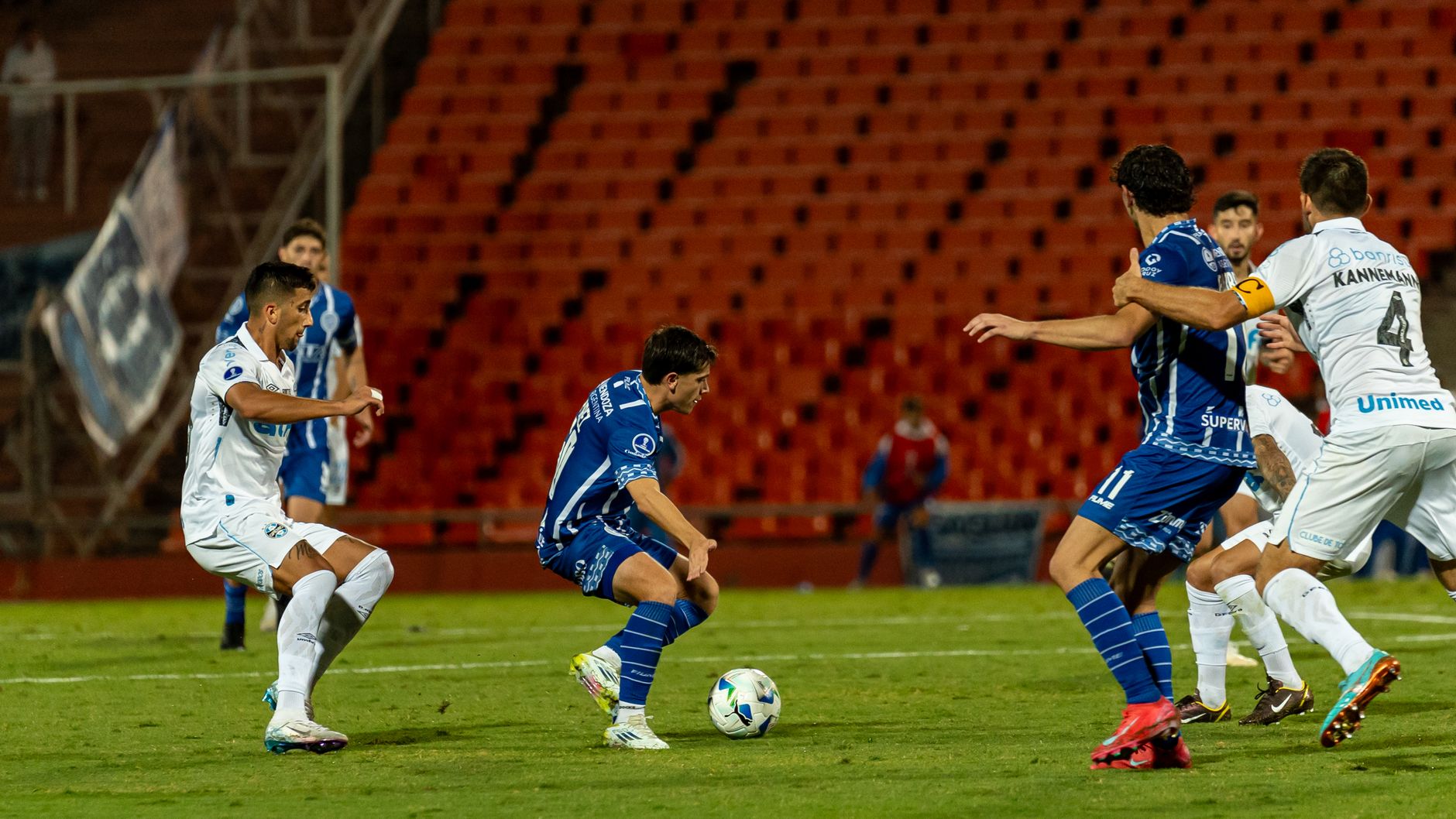
Photo by Franco Monsalvo on Pexels
See the details before the group stage gets noisy.
Key Los Angeles data points to monitor
- Eight scheduled matches: More fixtures mean more repeated venue data on pitch speed, crowd behavior, and travel patterns.
- June 12 USMNT opener: The United States Men’s National Team will attract heavy public interest, especially in American betting markets.
- 39 days of events: Fan behavior may affect market volume even on non-matchdays.
- LA Memorial Coliseum festival activity: Watch-party sentiment can influence casual betting flows.
- Official Fan Zones: Countywide events broaden participation beyond ticket holders.
This does not mean Los Angeles automatically creates a home advantage. SoFi Stadium is familiar to American sports fans, but World Cup football depends on grass surface preparation, kickoff timing, team base location, and opponent travel history. The edge is not “LA is loud”; the edge is knowing whether a national team’s tactical plan fits the match environment. Pitch Notes will treat Los Angeles as a case file, comparing pressing intensity, substitution timing, and player workload across matches. For related reading, use our [Internal Link: 2026 host city tactical tracker].
What about betting on early football world cup matches?
Early football world cup betting is risky because public prices often react faster to reputation than to tactical reality. The first round can expose mismatches in squad depth, travel adaptation, and set-piece defense, especially when expanded-field teams face elite pressing systems or unfamiliar climate conditions.
The common mistake is assuming that early fixtures are easier because favorites appear stronger on paper. In practice, the opening week can be the least stable betting period. Coaches protect fitness, underdogs simplify tactics, and bookmakers adjust aggressively after only one match of new evidence. A 1-0 win by a favorite may look disappointing but still reveal strong control metrics, while a 3-1 win may hide defensive transition problems. Therefore, Pitch Notes evaluates early matches through three layers: pre-tournament tactical identity, matchday lineup confirmation, and in-game substitution flexibility.
A less-discussed edge case is the “festival premium.” In host cities such as Los Angeles, New York/New Jersey, Dallas, Miami, Toronto, Vancouver, Mexico City, and Guadalajara, public excitement can cluster around recognizable teams. This may shorten odds on nations with star forwards even when their midfield balance is questionable. The contrarian conclusion is simple: the best early bet may be no bet until lineups confirm the tactical hypothesis. Responsible wagering also matters; if betting is legal in your jurisdiction, check rules with official regulators and use licensed operators only. For legal context in the United States, consult the American Gaming Association.
A practical pre-match checklist
- Confirm the venue and kickoff time before comparing odds.
- Check probable lineups twice, once 24 hours before kickoff and again near team-sheet release.
- Compare market movement against actual team news, not only media narratives.
- Review recent pressing and set-piece numbers rather than relying on FIFA ranking alone.
- Limit stake size during Matchday 1, when uncertainty is highest.

Photo by Franco Monsalvo on Pexels
For match-by-match context without chasing every rumor, keep a structured dashboard nearby.
Where does football world cup analysis fail?
Football world cup analysis fails when it treats teams as fixed identities rather than changing systems. Injuries, travel, opponent shape, rotation, weather, and referee interpretation can quickly weaken a pre-tournament model, especially in a 48-team event played across three large host countries.
The most visible failure is overconfidence. Analysts often say a team “must dominate possession” because it did so during qualification, but World Cup opponents rarely offer the same spacing. A team that controlled CONMEBOL, UEFA, AFC, CAF, Concacaf, or OFC qualifying may face a very different tempo in a neutral-site tournament. Even the official competition structure matters: more teams create more paths, but also more uncertainty around qualification incentives and rotation decisions. The FIFA World Cup Wikipedia overview summarizes the tournament’s historical evolution, but 2026 still requires fresh interpretation because format expansion changes group dynamics.
The quieter failure is ignoring the human calendar. A player leaving the English Premier League, Spanish LALIGA, German Bundesliga, Italian Serie A, or French Ligue 1 after a long club season may have different acceleration and recovery profiles than his national-team reputation suggests. This is where Pitch Notes separates player name value from player availability value. A star listed as fit may still be limited to 60 minutes, and that single detail can change live-betting decisions, corners markets, and second-half totals. To extend this approach, review our [Internal Link: player workload and injury risk analysis].
Should you try football world cup betting today?
You should only try football world cup betting today if you can use a disciplined process, legal betting access, and a fixed bankroll. The 2026 tournament offers many markets, but high visibility also increases emotional decisions, especially around host nations, star players, and knockout-stage narratives.
A calm approach starts with boundaries. Decide your maximum stake before opening any sportsbook, define what information would make you skip a bet, and avoid multiplying wagers simply because several matches appear on one day. For Pitch Notes readers, the useful question is not “Who will win?” but “What price would make this risk acceptable?” That framing turns football world cup coverage into analysis rather than impulse. It also prevents a common error: betting every famous match while ignoring lower-profile games where tactical mismatches may be clearer.
There are clear benefits and drawbacks. Benefits include more data, more markets, and more opportunities to test tactical views. Drawbacks include public-market distortion, late injury news, and emotional bias during national-team events. In short, 2026 rewards patience more than volume. Use Pitch Notes for daily insights, compare sources, verify team news, and treat Los Angeles, SoFi Stadium, the FIFA Fan Festival, and other host-city signals as context rather than automatic betting triggers.
Final decision framework
- Bet small early when lineups and team roles remain uncertain.
- Bet selectively later when tactical evidence becomes clearer.
- Avoid chasing losses during multi-match days.
- Track closing-line movement to measure whether your process is improving.
- Use Pitch Notes daily for predictions, player stats, and tournament coverage.

Photo by Vitaly Gariev on Pexels
Ready to follow the tournament with a sharper process?
Frequently Asked Questions
Q: What is the 2026 football world cup?
A: The 2026 football world cup is the next men’s FIFA World Cup, hosted by the United States, Canada, and Mexico with 48 national teams. It is the first edition to use the expanded 48-team format, which changes group-stage analysis and qualification scenarios. For fans and bettors, this means more matches, more travel variables, and more tactical uncertainty than previous tournaments.
Q: How should I prepare for football world cup betting?
A: Prepare by building a checklist that includes fixtures, lineups, venue data, player workload, and odds movement. Start with low stakes during the opening round because team roles and tactical rhythm are not fully established. Pitch Notes can help by providing match predictions, team tactics, player stats, and daily tournament coverage throughout FIFA World Cup 26.
Q: What is the difference between match predictions and betting tips?
A: Match predictions estimate likely outcomes, while betting tips consider whether the available odds offer enough value for the risk. A team can be likely to win but still be a poor bet if the price is too short. Strong football world cup analysis should separate tactical probability from market value before recommending any action.
Q: Why do football world cup bets fail even when the favorite looks strong?
A: Bets fail because favorites can be overpriced, rotated, injured, or tactically disrupted by disciplined underdogs. In tournament football, a single red card, set-piece goal, or late substitution can overturn a reasonable pre-match view. That is why Pitch Notes emphasizes squad news, game state, and price discipline rather than reputation alone.
Q: How much does it cost to follow Pitch Notes?
A: The cost depends on the access model available when you visit Pitch Notes, but the goal is to provide daily 2026 World Cup insights for serious fans. Readers should compare available content, update frequency, and betting relevance before relying on any single source. Always reserve your betting bankroll for licensed platforms and use analysis as a decision aid, not a guarantee.
Q: Is Los Angeles important for the 2026 football world cup?
A: Yes, Los Angeles is important because it is scheduled to host eight matches at SoFi Stadium and 39 days of fan celebrations. The city will also feature the FIFA Fan Festival at the LA Memorial Coliseum and Official Fan Zones across Los Angeles County. For bettors, Los Angeles matters because host-city attention can influence public sentiment and betting volume.
End of transmission.
Pitch Notes • Neon Protocol • System Active